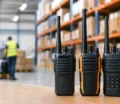

A radio that works perfectly in the parking lot can become unreliable the moment a team enters a warehouse aisle, a stairwell, a mechanical room, or the center of a high-rise floor. Designing in-building radio coverage means accounting for those real operating conditions before employees are depending on a call to coordinate a delivery, respond to a guest request, or handle an incident.
The goal is not simply to get a signal somewhere inside the building. It is to provide usable, repeatable voice communications in the locations where work happens. That requires a practical look at the building, the radio technology, the users, and any code or authority requirements that apply.
Start With the Communication Requirement
Coverage design begins with a clear definition of what must work and where. A distribution center may need dependable handheld-to-handheld communications in loading docks, freezer areas, rack aisles, offices, and outdoor yards. A hotel may need staff communications from guest floors to basements, elevators, parking garages, and event spaces. A manufacturing operation may prioritize loud-area audio performance and coverage around heavy machinery.
Those requirements affect much more than radio selection. They determine whether a simple radio system is sufficient or whether the site needs a repeater, distributed antenna system, signal boosters, additional antenna locations, or a Push-to-Talk over Cellular solution.
It also helps to define the type of traffic the system will carry. Routine operations, dispatch calls, maintenance coordination, security, and emergency communications do not always have the same coverage and reliability expectations. A system designed only around convenient office-area conversations may fall short when the team moves into the places where communication matters most.
What Blocks Radio Signals Indoors
Most coverage problems are not caused by a defective radio. They are caused by the structure between the radio and the signal source. Every building has its own RF personality, and assumptions based on square footage alone are rarely dependable.
Concrete, steel, low-emissivity glass, metal shelving, reinforced stairwells, underground spaces, and dense mechanical equipment can all reduce or distort radio signals. A large open warehouse may look straightforward on a floor plan, but pallet racking filled with inventory can create long shadowed areas. In a hospital, hotel, or office tower, fire-rated walls and elevator cores often become difficult coverage zones.
Frequency matters as well. Lower-frequency signals generally penetrate obstacles better than higher-frequency signals, but they also require larger antennas and may bring different licensing and channel-planning considerations. UHF is commonly practical for indoor business operations, particularly in dense buildings, but no band can overcome every construction challenge without thoughtful system design.
A building is also not static. Seasonal inventory, tenant improvements, new equipment, expanded racks, and even parked vehicles in a garage can change signal conditions. Designing with reasonable margin helps reduce the chance that a system becomes marginal after an operational change.
Survey Before You Specify Equipment
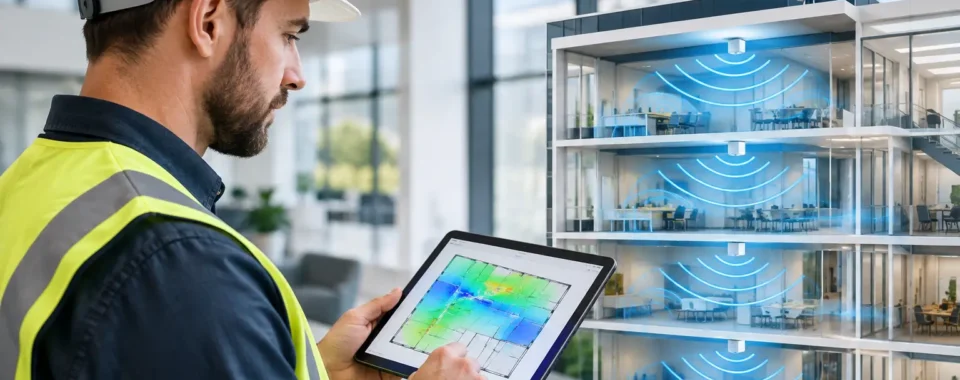
A site survey is the point where a coverage plan becomes a real design. It replaces estimates with field information. Technicians can evaluate existing signal levels, identify weak areas, assess possible antenna locations, and determine whether installed infrastructure can support the proposed system.
For a new facility, predictive modeling based on architectural drawings can provide an early picture of likely coverage. This is useful for planning cable pathways, equipment rooms, antenna locations, and budget requirements before walls are closed. It should still be followed by on-site validation once the building is complete and furnished.
For an existing building, a walk test is especially valuable. The test should use the actual radios, or closely comparable radios, that workers will carry. A signal-strength reading alone is not enough. The technician should evaluate intelligible audio, transmit reliability, channel access, and behavior at the edges of the desired coverage area.
Test the Places People Usually Forget
Operations teams often know the trouble spots before a survey starts. Ask supervisors, drivers, security personnel, maintenance staff, and dispatchers where calls fail or become unclear. Their answers often point to areas that are easy to overlook on a drawing:
- Stairwells, elevators, and elevator lobbies
- Basements, tunnels, and parking structures
- Mechanical rooms, electrical rooms, and roof-access areas
- Freezers, loading docks, and high-density storage aisles
- Interior restrooms, break rooms, and remote offices
These spaces may not all require the same level of coverage. A maintenance closet used once a month has different operational value than a loading dock used continuously. That distinction helps keep the project focused and cost-effective.
Choose the Right System Architecture
The best approach depends on the building and the communication model. In a small facility with limited obstructions, properly selected handheld radios may provide adequate direct radio-to-radio coverage. This is the least complex option, but it can be vulnerable to changes in user location, building layout, and radio orientation.
A conventional repeater can extend coverage by receiving a radio transmission and retransmitting it from a better antenna location. This is often a strong choice for campuses, warehouses, larger properties, and facilities where outside-to-inside communication is needed. Antenna placement, coaxial cable loss, grounding, and frequency coordination are all part of making that repeater perform as intended.
For difficult structures, a distributed antenna system or bi-directional amplifier arrangement may be needed. These systems use a network of indoor antennas to bring RF coverage into areas a single antenna cannot reach reliably. They are common in larger buildings, hospitals, garages, high-rises, and facilities with heavy concrete or steel construction.
Push-to-Talk over Cellular can be another practical option, particularly for teams operating across multiple sites, vehicles, and states. If LTE or 5G service is usable inside the facility, PoC provides broad-area communications without building a local RF network. However, cellular coverage must be verified in the same critical indoor locations. In some facilities, a combination of local two-way radio coverage and PoC provides the most practical result.
Design for the User, Not Just the Floor Plan
Radio coverage and radio usability are connected. A worker operating a forklift, wearing gloves, working around loud equipment, or moving between indoor and outdoor spaces needs more than a usable signal. They need a radio, speaker microphone, earpiece, or headset that supports clear communication without slowing the job down.
Audio quality deserves attention. Noise-canceling accessories, higher-powered speakers, and appropriate audio profiles can make a significant difference in manufacturing, hospitality, transportation, and event environments. Battery capacity also matters. A radio that performs well during a morning test but cannot complete a full shift is not an operational solution.
Channel planning should be kept simple enough for daily use. Many organizations benefit from separate channels or talkgroups for operations, maintenance, security, and management, but too many options can create confusion. The right number depends on team size, call volume, and whether groups need to communicate independently or hear one another.
Code Compliance and Public-Safety Requirements
Business communications systems and public-safety radio coverage systems are not interchangeable. A facility may need coverage for its own staff while also being subject to local requirements for first responder radio communications. These requirements can involve fire code provisions, testing standards, approved equipment, battery backup, monitoring, documentation, and acceptance testing by the authority having jurisdiction.
Requirements vary by jurisdiction and building type. The right time to identify them is early in planning, especially for new construction, major renovations, healthcare facilities, high-rises, and larger public venues. Retrofitting a system after an inspection issue can be more disruptive and expensive than coordinating the design during the project.
FCC licensing is another consideration for many business radio systems. Licensed frequencies can provide greater control, reduced interference risk, and better long-term planning than relying on unlicensed options in a busy area. The correct path depends on the radios, frequencies, intended users, and coverage design.
Validate Coverage After Installation
Installation is not the finish line. The completed system should be tested against the coverage objectives set at the beginning of the project. That means checking voice quality and transmit performance in critical spaces, documenting results, and correcting weak areas before the system is handed over to the operations team.
Training also matters. Employees should know how to select the correct channel or talkgroup, use emergency features where applicable, care for batteries, and report coverage concerns with enough detail to troubleshoot them. A report such as “the radios do not work in back” is less useful than identifying a specific dock door, stairwell level, or warehouse aisle.
Good in-building coverage is built from measured conditions, not promises on a spec sheet. Whether the answer is a properly placed repeater, distributed antennas, PoC radios, or a blended system, the practical question remains the same: can your team communicate clearly where the work actually happens? A qualified survey and a straightforward conversation about those locations are the best place to start.