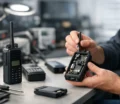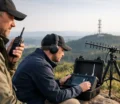

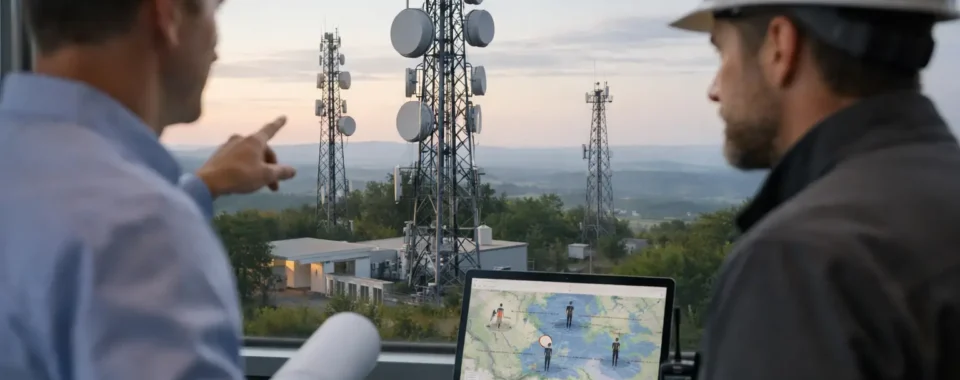

A radio system can sound excellent during a parking-lot demonstration and fail the first time a driver enters a loading dock, a crew moves behind a ridge, or an event crowd fills the building. This commercial radio infrastructure planning guide starts where successful projects start: with the work your people must perform, the places they must perform it, and what happens when a call does not get through.
Start with the operational problem
Do not begin by choosing radios or pricing a tower. Begin with the communication failures that are costing time, safety, or customer service. A warehouse may need clear communications between docks, freezers, mezzanines, and yard crews. A construction company may need coverage across changing job sites. A fleet may need dispatch, GPS visibility, and voice contact across multiple states.
Document who needs to talk, who needs to listen, and whether communications are one-to-one, group-based, or dispatcher-led. Also identify the moments when traffic peaks. Shift changes, emergency responses, loading windows, and large events can create very different demands than ordinary day-to-day use.
A useful requirements document should define at least these five items:
- Required coverage areas, including indoor spaces, outdoor property, roads, and dead zones that cannot be tolerated.
- The number of users, talk groups, dispatch positions, and simultaneous conversations expected at busy times.
- Audio expectations, such as use in high-noise areas, hands-free operation, recording, or paging.
- Needed data features, including GPS, text messaging, worker safety functions, and integration with existing software.
- Availability expectations, including what level of interruption is acceptable during a power loss or equipment failure.
This step prevents a common and expensive mistake: building for the building footprint instead of the actual workflow.
Commercial radio infrastructure planning: choose the right system
Infrastructure should support the radio technology, not force the technology. For many organizations, the choice comes down to licensed land mobile radio, Push-to-Talk over Cellular, or a combination of both.
Licensed DMR and other land mobile radio systems give an organization control over local coverage. With properly designed repeaters, antennas, and frequencies, they can provide dependable voice service on a campus, property, facility, or defined service territory. They are often the right fit where cellular coverage is weak, where low-latency group calling matters, or where the organization needs a system it directly operates.
Push-to-Talk over Cellular, often called PoC, uses commercial cellular and Wi-Fi networks. It can be a practical choice for fleets and distributed teams because coverage can extend far beyond a single radio site without the cost of constructing a large regional RF network. The trade-off is that performance depends on carrier and Wi-Fi availability in the places your team works. A coverage review is still necessary, especially in rural areas, basements, ports, industrial sites, and remote facilities.
A hybrid design is often the sensible answer. For example, a manufacturing site may use conventional radios for on-property operations while supervisors and delivery vehicles use PoC radios for wider-area coordination. The right choice depends on coverage, user behavior, operating cost, regulatory needs, and the consequences of losing service.
Do not confuse radio range with coverage
Handheld radio range claims are not a coverage plan. Terrain, building materials, antenna height, vehicle bodies, electrical noise, and nearby structures all affect RF performance. A repeater placed at the right elevation can improve a system dramatically, while an improperly located repeater can leave persistent weak spots despite higher transmitter power.
Site surveys and propagation analysis provide a starting point, but field testing remains valuable. Test with the intended radio model and accessories, in normal work locations, at the times when the environment is busiest. A quiet building at 7 a.m. is not the same RF environment as a busy facility full of equipment, vehicles, and people at 2 p.m.
Design the site, not just the radio room
A commercial radio site is a collection of connected systems. The repeater is only one part of the plan. Antennas, transmission line, grounding, power, backhaul, environmental protection, and physical security all deserve attention before installation begins.
Antenna placement is especially important. Height can improve coverage, but it also introduces practical concerns such as tower loading, wind exposure, lightning protection, zoning requirements, and access for maintenance. Antennas must be selected for the frequency band and application, then installed with suitable separation from other antennas to reduce interference.
Feedline losses also matter. Long coaxial cable runs can reduce the usable signal reaching the antenna, particularly at higher frequencies. In some cases, better cable, a different antenna location, or equipment placed closer to the antenna produces a better outcome than simply increasing transmitter power.
Plan for power, grounding, and failure modes
Commercial communications equipment needs more than a standard wall outlet. A properly planned site includes surge protection, a suitable grounding system, battery backup, and, where the operational need justifies it, generator support. The goal is not to make every site elaborate. It is to align the backup design with the real cost of an outage.
Consider what happens if commercial power fails for 15 minutes, four hours, or two days. A hospitality property may need short-duration backup to maintain staff coordination during an interruption. A utility contractor, emergency support operation, or remote site may require longer runtime and a documented refueling plan.
Redundancy should be applied thoughtfully. A second repeater, alternate antenna path, spare power supply, or backup dispatch connection may be worthwhile where downtime has a serious impact. For a smaller operation, maintaining tested spare radios and a clear fallback procedure may provide better value than duplicating every component.
Address licensing and interference early
Most business land mobile radio systems in the United States require FCC licensing and frequency coordination. Licensing is not a final paperwork task after equipment arrives. Frequency availability, system design, antenna location, and expected coverage can all influence the license application and the final design.
An experienced provider can help identify whether a business needs its own licensed channels, access to an existing repeater system, or a different technology altogether. This is also the time to evaluate neighboring users, co-located transmitters, and potential interference sources. A system that works properly on paper can still have problems if it is installed near high-power RF equipment without appropriate filtering and antenna isolation.
Keep documentation organized. Record licenses, frequencies, site drawings, equipment serial numbers, programming files, battery schedules, and service contacts. When a radio issue occurs months later, accurate records reduce troubleshooting time considerably.
Build maintenance into the budget
Infrastructure is not a one-time purchase. Antennas weather, batteries age, connectors corrode, software changes, and user needs grow. A maintenance plan should include periodic inspections of antennas, cable runs, grounding, backup power, and environmental conditions. It should also cover radio programming control so unauthorized changes do not create interoperability or safety problems.
Train users on the basics that prevent many support calls: proper charging, microphone placement, talk-group selection, emergency button use, and reporting a damaged radio promptly. Supervisors and dispatch personnel need additional training on call procedures, escalation paths, and what to do when a primary communications method is unavailable.
For organizations with multiple sites or mobile crews, standardizing radio models, accessories, charging practices, and programming templates makes support easier. Standardization does not mean every user gets the same device. A forklift operator, security lead, field technician, and fleet driver may need different accessories or form factors while remaining on the same managed communications plan.
Make the final decision from tested evidence
The best infrastructure plan is one that can be explained in operational terms: where it works, what it supports, what it costs to maintain, and what happens when conditions are less than ideal. Ask for coverage assumptions, power-runtime estimates, licensing steps, installation scope, and a clear acceptance test before approving a project.
Cogent Radios Group helps organizations turn those questions into a practical design that matches field conditions instead of brochure claims. Before committing to equipment or site construction, walk the property, test the difficult areas, and plan for the day communications matter most.