

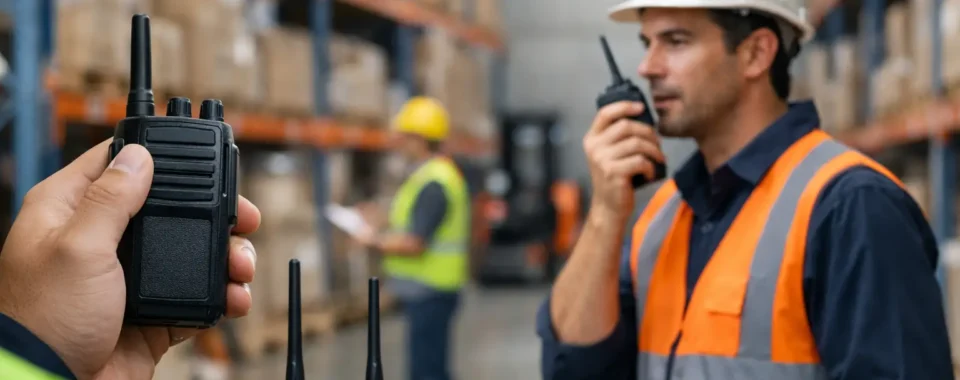

A missed call from the loading dock can hold a truck at the gate. A dead spot in the center aisle can send a forklift operator looking for a supervisor. In a fast-moving facility, a radio coverage solution for warehouses is not an accessory – it is part of the operating system that keeps people, equipment, and shipments moving.
The right answer is rarely just buying higher-power radios. Warehouses are difficult radio environments: steel rack, dense inventory, concrete, refrigeration equipment, mezzanines, dock doors, and outdoor yards all affect signal behavior. A system has to be designed around how your team actually works, not around a coverage claim printed on a box.
Why warehouse radio coverage fails
Warehouses can look open, but they are full of obstacles that absorb, reflect, and scatter radio signals. Tall pallet racking creates long corridors that may carry a signal well in one direction while blocking it in another. Stock levels change, which means coverage can change too. A facility that works well when racks are half full may develop weak areas during peak inventory periods.
Concrete walls, metal fire doors, elevator shafts, machinery, and freezer panels add further losses. Outdoor coverage presents its own challenge. A radio that works inside the building may not reliably reach a driver in the trailer yard, a gate attendant, or a maintenance technician at the far end of the property.
The operational impact is usually obvious before the technical cause is. Teams repeat transmissions, rely on personal cell phones, walk to find someone, or stop work until a manager can be reached. Those workarounds cost time and can create safety issues around vehicle traffic, docks, or equipment maintenance.
Start with a warehouse coverage assessment
A useful radio design begins with a coverage assessment. This does not need to be complicated for the customer, but it should be thorough. The goal is to identify where communications must work, who needs to communicate, and what might interfere with the system.
Walk the facility with its real use in mind. Test receiving, shipping, staging, high-bay aisles, packing lines, offices, maintenance rooms, freezers, roofs, stairwells, and parking or trailer areas. Consider the locations where an employee could be working alone or where a delayed message would matter most.
The assessment should also define user groups. Forklift drivers may need an open channel to dispatch. Maintenance may need a separate working channel. Security, safety staff, and supervisors may require the ability to reach all groups during an incident. Separating routine traffic prevents one busy department from tying up everyone else.
A site survey also helps determine whether the issue is coverage, capacity, radio programming, or user practice. For example, a single channel may provide acceptable signal throughout a building but still feel inadequate when 40 users try to share it during a busy shift.
Choosing the right radio coverage solution for warehouses
Most warehouse systems fall into two practical categories: on-site DMR radio systems and Push-to-Talk over Cellular, often called PoC. In some operations, the best approach is a combination of both.
DMR for controlled on-site communications
Digital Mobile Radio, or DMR, is a strong fit when a facility needs dependable local communications without relying on cellular service. Radios communicate through direct radio channels, or through a repeater installed to extend coverage across the building and property.
A properly placed repeater, antenna system, and quality portable radios can provide clear communications across large facilities. DMR also supports group calling, individual calling, emergency features, text messaging on compatible equipment, and digital channel capacity. A repeater can carry more organized traffic than a basic analog system, helping separate departments or shifts.
The trade-off is infrastructure. Larger or more complex buildings may need a repeater, antenna cabling, rooftop or elevated antenna placement, battery backup, and professional installation. If the radios operate on licensed business frequencies, FCC licensing and frequency coordination may also be required. This adds planning, but it gives the operation control over a dedicated communications system.
Direct radio-to-radio operation can be useful in a small warehouse, but it should not be assumed to cover every aisle, office, and yard. Portable radios are limited by building construction and antenna height. A repeater is often the difference between occasional communication and dependable facility-wide coverage.
PoC for sites, fleets, and distributed teams
Push-to-Talk over Cellular radios use commercial cellular networks and Wi-Fi to provide radio-style group communication. They are especially effective for companies with multiple warehouses, regional drivers, field crews, or managers who need to communicate beyond one property.
For a warehouse with strong indoor cellular or Wi-Fi coverage, PoC can eliminate the need for an on-site repeater. A supervisor at one location can speak to a delivery driver, another warehouse, or a remote manager using the same talk group. GPS tracking, dispatch features, and nationwide coverage can also make PoC attractive for fleet and logistics operations.
PoC does depend on network availability. Before choosing it as the primary warehouse system, test the cellular carriers and Wi-Fi in the actual work areas, particularly freezers, lower-level rooms, docks, and interior aisles. A good device cannot overcome a weak network signal. Wi-Fi design, access point placement, and network policies may need attention if the building has poor cellular penetration.
For some organizations, a hybrid plan makes sense. DMR handles immediate on-site operations, while PoC connects supervisors, drivers, and remote locations. The right choice depends on coverage, workflow, budget, and whether the business needs communications outside the building.
Design details that determine real-world performance
Equipment selection matters, but system design matters more. A practical warehouse radio system considers antenna location, cable length, mounting method, battery backup, and equipment protection. Every connection and installation decision can affect performance.
Antenna placement is particularly important. Mounting an antenna low inside a metal-heavy area can limit the benefit of a repeater. An elevated, properly grounded antenna location may improve coverage dramatically, but the final placement must account for building access, safety requirements, cable runs, and local conditions.
Radio models should match the job. Forklift operators may need compact units with speaker microphones. Maintenance personnel may need higher-capacity batteries, emergency buttons, and durable housings. Employees in refrigerated environments may need accessories that remain usable with gloves and equipment rated for the conditions. Noise levels at docks and around conveyors can make a remote speaker microphone or noise-reducing accessory more valuable than an extra radio feature.
Do not overlook charging. A fleet of radios is only useful if it is ready at shift change. Multi-unit chargers, spare batteries, assigned radio numbers, and a simple check-in process reduce loss and prevent dead batteries from becoming a daily problem.
Build talk groups around work, not job titles
A common mistake is putting the whole warehouse on one channel. That may work for a small team, but as call volume rises, messages get stepped on and urgent traffic gets buried.
Organize communications around tasks and response needs. Receiving and shipping might share one talk group; picking and replenishment another; maintenance and facilities a third. Supervisors can have access to the groups they oversee, with a designated emergency channel or priority procedure for everyone.
Keep the plan simple enough that employees can use it under pressure. Clear radio names, short call procedures, and a consistent method for reporting location reduce confusion. Train users to pause before speaking, keep messages brief, and confirm critical instructions. Good radio discipline improves any system, regardless of technology.
Plan for growth, failures, and compliance
A radio system should account for next year, not only this month. If a warehouse plans to add shifts, expand racking, open another facility, or increase yard activity, design enough channel capacity and management flexibility to support that growth.
For DMR systems, ask how the system will operate during a power outage. Battery backup for repeaters and network equipment can preserve communications when they are needed most. For PoC systems, consider backup carrier options, Wi-Fi resilience, and the procedures employees will follow if the cellular network is unavailable.
Licensed business radio systems require proper FCC authorization. Using the correct frequencies protects the business from interference and helps avoid regulatory problems. It also gives the operation a clearer path for coordinating a system designed for its specific site and communications needs.
Cogent Radios Group helps organizations evaluate coverage conditions, select appropriate DMR or PoC equipment, and plan the infrastructure behind reliable business communications. The objective is not to make a warehouse more complicated. It is to make every necessary call reach the right person when work is moving fast.
Before replacing radios because of a few frustrating dead spots, map where and when those failures happen. That information turns a vague coverage complaint into a practical design decision – and gives your team a better chance of being heard the first time.