

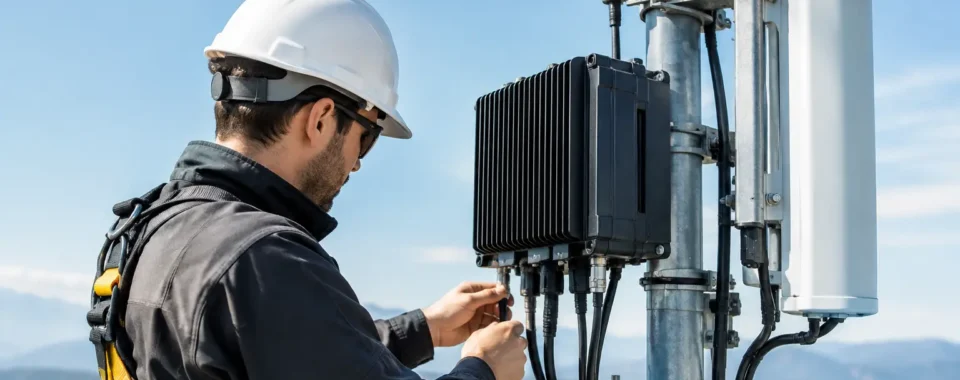

A repeater can turn an unreliable radio system into a practical working tool for a fleet, campus, farm, event venue, or community group. But learning how to install a radio repeater is not just a matter of connecting two radios and mounting an antenna. The site, antenna system, frequency authorization, electrical protection, and final testing all determine whether users gain useful coverage or inherit a noisy, unreliable system.
For most professional installations, the right approach begins with a coverage goal. Define the area your team must communicate in, where radios currently fail, how many users will be active at once, and whether indoor coverage matters as much as outdoor coverage. A repeater installed for a warehouse and loading yard needs different antenna placement and radio settings than one serving a rural property, multibuilding campus, or regional service territory.
Start With the Right Repeater System
A repeater receives a signal on one frequency and retransmits it on another. That retransmission, usually from a better antenna location, extends the usable range of portable and mobile radios. The system generally includes a repeater, duplexer, antenna, feed line, power supply or battery backup, grounding equipment, and a properly designed equipment enclosure or rack.
Choose equipment for the service you are authorized to use. A business DMR repeater, a GMRS repeater, and an amateur repeater may look similar in a rack, but their licensing, coordination, programming, and permitted use are different. FRS does not permit repeaters. Commercial users generally need FCC licensing and frequency coordination before transmitting, while GMRS operators need a GMRS license and must follow the applicable rules for shared spectrum. Amateur systems require properly licensed amateur operators and cannot be used for business communications.
Digital and analog systems also deserve an early decision. Analog can be simple and familiar for smaller teams. DMR can provide better channel efficiency, individual or group calling options, and useful features for larger operations, but every subscriber radio must be programmed correctly. If teams operate across wide geographic areas with dependable cellular service, Push-to-Talk over Cellular may solve the coverage problem without building a local RF repeater network. The best choice depends on the operating environment, not on which technology sounds more advanced.
How to Install a Radio Repeater: Plan the Site First
The antenna site has more influence on coverage than transmitter power. Height is valuable when it provides a clearer path between the repeater antenna and user radios, but height alone cannot overcome terrain, dense construction, metal buildings, or poor feed line choices.
Start with a site survey. Review terrain, building construction, expected travel routes, existing radio traffic, available AC power, grounding access, climate exposure, and the path from the equipment location to the antenna. A rooftop may work well for a compact urban service area, while a tower, elevated water tank site, or hilltop may be needed for broad rural coverage. Keep in mind that a remote high site can add access, leasing, maintenance, and backhaul costs.
Confirm that the proposed antenna location is structurally appropriate and permitted. Do not treat tower climbing, roof penetrations, antenna mounting, or lightning-protection work as a casual do-it-yourself task. Qualified tower and electrical professionals should handle work that involves fall hazards, structural loading, or code compliance.
The equipment room should be dry, secure, ventilated, and accessible for service. Repeater equipment generates heat, and high temperatures shorten its life. Leave room around the cabinet or rack for airflow, service access, and future equipment such as a second repeater, battery backup, multicoupler, or monitoring device.
Build an Antenna System That Preserves Signal Quality
A strong repeater connected to a poor antenna system will disappoint users. Select an antenna rated for the frequency band, power level, and local weather conditions. Omni-directional antennas are common when coverage is needed in all directions. Directional antennas can focus energy toward a particular route, valley, facility, or service area and may reduce unwanted signals from another direction.
Use quality, low-loss coaxial cable sized for the run length and frequency. Longer cable runs create more loss, particularly at UHF and higher frequencies. This is why placing the repeater near the antenna is sometimes preferable to placing it in a convenient office far below the roofline. Every connector, adapter, lightning arrestor, and splice is another potential point of loss or failure, so use as few as practical and weatherproof all exterior connections.
Most single-antenna repeaters require a duplexer. This tuned filter allows the receiver and transmitter to share one antenna while operating on separate frequencies. It must be adjusted for the authorized transmit and receive pair, and its isolation must be verified with appropriate test equipment. A poorly tuned duplexer can desensitize the receiver, cause interference, or make a system seem weak even when the transmitter appears to be working.
In some designs, separate transmit and receive antennas may be used instead. That can reduce filtering requirements, but adequate antenna separation is still needed. This is a design decision best made after considering the site, frequencies, desired coverage, and potential interference sources.
Power, Grounding, and Lightning Protection Are Not Optional
A repeater should be powered from a reliable dedicated electrical circuit where possible. Use correctly sized power supplies and follow the equipment manufacturer’s voltage and current requirements. For business or mission-critical use, add battery backup and, when appropriate, generator support. A brief utility outage should not automatically take communications down with it.
Grounding and surge protection protect equipment and help reduce damage from electrical events. Bond the rack, repeater chassis, antenna system, coaxial surge protector, and building grounding system according to applicable electrical codes and manufacturer instructions. The goal is a common, low-impedance grounding path, not a collection of isolated ground wires.
Install a properly rated coaxial lightning arrestor at the cable entry point and keep the ground connection short and direct. A surge protector is not a substitute for correct grounding, and no installation can guarantee survival from a direct lightning strike. It can, however, substantially improve the system’s resilience against common surge events.
Program the Repeater and Radios as One System
Before applying power, document the planned settings: transmit and receive frequencies, bandwidth, analog tone or digital color code, time slot if applicable, network settings, transmit time-out timer, hang time, ID requirements, and emergency-call behavior. Label cables and equipment clearly. The technician who services the site two years from now should not have to guess what each connection supports.
Program subscriber radios to match the repeater exactly. For analog operation, that may include CTCSS or DCS tones. For DMR, it can include color code, time slot, talkgroup, admit criteria, and roaming or scan behavior. A mismatched setting can look like a coverage problem when it is actually a programming problem.
Set a reasonable transmit time-out timer to prevent a stuck microphone from holding the system. Configure receiver squelch carefully. If it is too tight, weak but usable field signals will be rejected. If it is too loose, noise and interference may keep the repeater active. The right setting comes from measurement and real-world testing, not guesswork.
Test Coverage Before Calling the Job Complete
Bench testing confirms that the equipment powers up and transmits. It does not prove that the system works where crews need it. Conduct a coverage test with the same models of portable and mobile radios your team will actually use. Test inside buildings, around loading docks, in vehicle parking areas, along common travel routes, and at known trouble spots.
Record received audio quality, transmit reliability, signal strength where measurement tools are available, and any locations with interference. Pay attention to inbound performance as well as outbound performance. A user may hear the repeater clearly yet be unable to reach it from a portable radio inside a steel-framed building.
If results fall short, resist the instinct to increase transmitter power first. An antenna relocation, improved feed line, better filtering, a directional antenna, or an additional coverage site may solve the real problem more effectively. For difficult indoor environments, a distributed antenna system, bi-directional amplifier, or additional local infrastructure may be more appropriate than one high-power repeater.
Maintain the System Before It Becomes an Outage
Repeaters are infrastructure, not install-and-forget equipment. Schedule periodic inspections of antenna connections, feed line condition, grounding bonds, battery health, ventilation, alarms, and transmit performance. Keep a current programming file, system diagram, license records, and a list of authorized technicians.
A well-designed repeater gives teams one less thing to think about when work gets busy. If your coverage requirement is unclear or the site has tower, licensing, interference, or indoor-building challenges, involve an experienced radio systems partner early. Cogent Radios Group can help turn the coverage map your team needs into a practical system that is built to stay on the air.