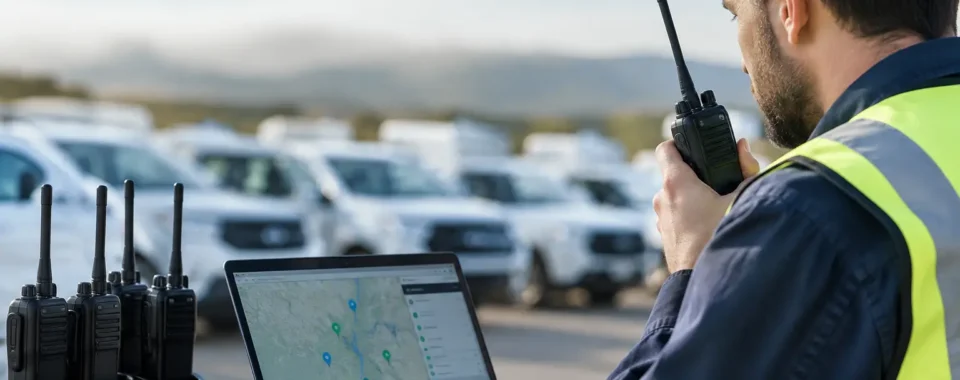

A radio fleet rarely fails all at once. More often, teams start reporting missed calls at the edge of coverage, noisy analog audio, overloaded channels, or radios that no longer match the way the operation works. This DMR fleet migration guide is designed for organizations replacing an aging analog system, standardizing a mixed radio fleet, or expanding capacity without creating a communications gap during the transition.
DMR can improve voice clarity, channel efficiency, fleet management, and feature options, but the equipment purchase is only one part of the project. A successful migration starts with the work your people do, the places they work, and the coverage they need when conditions are less than ideal.
Start With an Operational Audit, Not a Radio Model
Before selecting portable radios, mobiles, repeaters, or accessories, document how the existing system is actually used. The dispatch office may have one view of operations, while drivers, maintenance teams, security personnel, and supervisors may use radios very differently in the field.
Identify who needs to talk to whom, where they work, and whether their calls are routine, safety-related, or time-sensitive. A warehouse team may need short-range communications across loading docks and metal shelving. A utility or agricultural operation may need reliable coverage over miles of terrain. A transportation fleet may need mobile radios, GPS, and dispatch visibility. Those needs lead to different system designs.
A useful audit should capture at least four areas:
- Current radio count, model, age, battery condition, and accessory compatibility
- Existing frequencies, FCC license information, and repeater details
- Coverage complaints by building, route, site, or outdoor work area
- Call patterns, including departments that need private communications or shared channels
Do not assume an analog channel plan will translate directly into DMR. Digital systems allow more flexible grouping and call handling, but that flexibility must be designed around real workflows. Too many talkgroups can make radios difficult to use. Too few can force unrelated departments onto the same traffic path.
Define What DMR Must Solve
DMR is often selected because it uses two time slots within a 12.5 kHz channel. In practical terms, that can provide two independent voice paths on a properly configured repeater pair. For a busy operation, this may increase capacity without requiring another frequency pair. It does not automatically solve every coverage or congestion problem, however.
Set measurable goals before committing to a design. For example, a facility may require reliable portable coverage in all production areas and at the perimeter gates. A fleet operation may require intelligible mobile coverage along designated routes. A school, venue, or hospitality property may prioritize quick calls between departments, discreet security communications, and radios that are simple for occasional users.
Also decide which features genuinely support the operation. Common DMR capabilities include individual calling, group calling, emergency alerts, text messaging, GPS location, remote monitor functions, and dispatch integration. Every feature adds programming and training considerations. If a feature will not be used or supported, leaving it out usually makes the fleet easier to manage.
Conventional, Repeater, or Wide-Area Design?
A small site with limited traffic may operate well with direct radio-to-radio communications. This is simple and can be cost-effective, but range is limited by terrain, buildings, antenna performance, and radio placement.
A repeater-based DMR system is often the better fit when teams need coverage throughout a larger property or when they need to communicate from portable and mobile radios across challenging areas. The repeater’s location, antenna height, feedline quality, power backup, and filtering all affect the outcome. A repeater placed in the wrong location can leave expensive radios with the same dead zones as the old system.
Organizations with multiple facilities or vehicles traveling beyond local radio coverage may also consider a broader networked radio or Push-to-Talk over Cellular solution. This is not necessarily a replacement for on-site DMR. Some operations benefit from both: DMR for dependable local communications and cellular-based coverage for regional or nationwide coordination.
Verify Frequencies and FCC Requirements Early
Frequency and licensing questions should be resolved before ordering a full fleet. In the United States, most business radio operations require properly authorized frequencies and an FCC license. A digital migration may use existing licensed frequencies, but changes to emission designators, equipment, locations, antenna systems, or operational parameters may require license review or modification.
This is also the time to check for frequency coordination requirements and potential interference issues. A system that sounds fine during a quick bench test may experience interference at a tower site or at the edge of the intended service area. Experienced technical review can prevent delays after equipment is already in hand.
Do not treat licensing as paperwork separate from system design. The licensed parameters, frequency pair, antenna height, and transmitter power all influence what can be built and how well it can perform.
Build the Fleet Plan Before Programming Begins
Once the coverage approach and frequency plan are clear, create a fleet plan that is specific enough for programming and future service. This plan becomes the reference for radio IDs, talkgroups, channel names, scan lists, emergency behavior, and user permissions.
Keep channel names short and meaningful on the radio display. A driver should not need to remember whether “Group 7” is dispatch, maintenance, or security. Clear labels such as Dispatch, Operations, Maintenance, and Emergency reduce errors during busy shifts.
Radio programming, often called the codeplug, deserves careful control. Standardize it by role rather than creating a unique setup for every individual radio. For example, all field technicians may receive the same primary channels and scan behavior, while supervisors receive an additional management talkgroup. This makes replacements, repairs, and training much easier.
Consider emergency button behavior carefully. An emergency alert must go somewhere that is staffed and understood. If the alert is sent only to radios on a channel that nobody is actively monitoring, it can create false confidence. Establish who receives the alert, what information they see, and what response is expected.
Protect Interoperability During the Transition
The biggest migration mistake is scheduling one cutover date without a practical fallback plan. Operations do not pause because a radio programming file needs correction or an antenna issue appears during testing.
For many organizations, a phased deployment is safer. Start with a pilot group that represents real field conditions: a dispatcher, a supervisor, several mobile users, and portable-radio users working in difficult locations. Let them use the new system during normal activity, not just a controlled demonstration.
If analog users must remain active temporarily, plan that coexistence deliberately. Depending on the system architecture, analog and digital use may be supported during the transition, or separate channels may be needed. The right approach depends on available frequencies, equipment capabilities, traffic volume, and the operational risk of splitting users between systems.
Encryption requires the same discipline. It can protect sensitive communications, but only when every authorized radio, dispatch console, and partner agency is configured correctly. It can also prevent direct interoperability with mutual-aid partners or contractors using unencrypted equipment. Define which talkgroups need protection and which need broad compatibility rather than applying encryption indiscriminately.
Test Coverage Where Work Actually Happens
A coverage test should follow the work, not just the property map. Test loading bays, stairwells, mechanical rooms, parking structures, remote gates, vehicle routes, and outdoor work zones. Test with the type of radio that will be used there. A mobile radio with an external antenna may perform well where a portable radio carried at hip level does not.
Document weak areas and distinguish between acceptable limitations and operational problems. No RF system is perfect everywhere, particularly in steel structures, underground spaces, dense urban areas, or uneven terrain. The objective is to confirm that critical areas meet the agreed requirement and that users understand any known limitations.
Test more than voice quality. Verify emergency functions, scan behavior, display labels, battery runtime, charger performance, GPS reporting if used, and dispatch communications. If the system includes a repeater, test it under realistic call traffic rather than with a single short transmission.
Train for the First Shift, Not the Feature Sheet
Field users do not need a programming manual. They need to know how to turn the radio on, select the correct channel, make a call, charge it correctly, recognize an emergency alert, and report a problem. Keep training role-specific and hands-on.
Supervisors and radio administrators need deeper instruction. They should understand basic troubleshooting, spare-radio procedures, charging and battery rotation, and how to request programming changes without creating unauthorized configurations. A few well-prepared internal radio champions can significantly reduce downtime after deployment.
Provide a simple channel-use policy as part of the rollout. It should explain which channel each team uses, when to use the emergency function, expected radio etiquette, and who to contact for support. This is especially valuable for seasonal staff, events, and operations with frequent employee turnover.
Plan Support, Spares, and Lifecycle Costs
A DMR migration should include what happens after installation. Budget for replacement batteries, speaker microphones, chargers, antenna maintenance, programming updates, and a reasonable number of ready-to-issue spare radios. A fleet with no spares often turns a minor repair into a communications problem for an entire shift.
Keep a current inventory that ties each radio serial number to its assigned user or vehicle, programmed role, and service history. This helps with repairs, lost-radio response, asset accountability, and future expansion.
Cogent Radios Group can help organizations assess their existing fleet, evaluate coverage needs, address licensing questions, and build a practical migration plan around the way their teams operate. The right outcome is not the most complicated radio system. It is a system your people can depend on, understand, and maintain when the workday gets demanding.
A careful migration gives your operation room to grow without asking employees to gamble on communications during the change. Start with the real work, test in the real environment, and make every radio setting serve a clear operational purpose.