

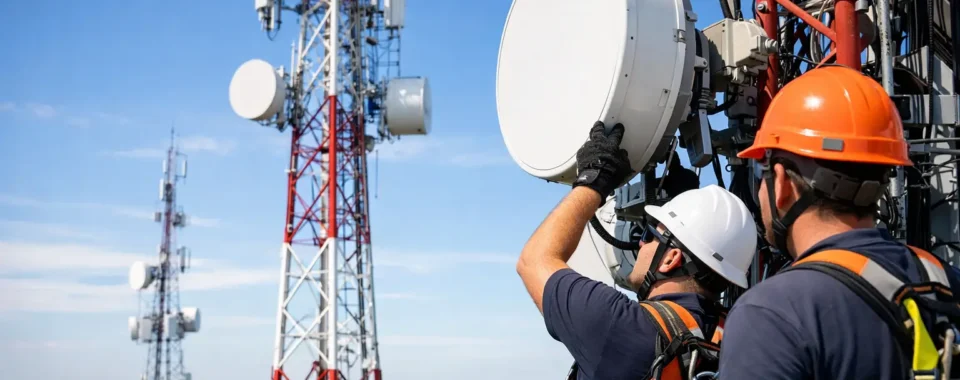

If your radio system works perfectly at ground level but falls apart across a jobsite, campus, fleet route, or rural property, the problem often starts above your head. Commercial radio tower services are what keep the infrastructure side of communications reliable – not just the radios in your crews’ hands, but the antennas, feedlines, mounts, grounding, and tower-mounted equipment that make coverage possible.
For many organizations, towers are easy to ignore until something breaks. A repeater starts underperforming. Coverage drops in one direction. Water gets into a feedline. Wind shifts an antenna. A tenant adds equipment and suddenly there is interference or loading concern. By the time users complain, the tower issue has usually been developing for a while.
Why commercial radio tower services matter
A tower is not just a place to bolt on antennas. It is part of the radio system itself. Height, antenna placement, cable condition, connector integrity, grounding, and structural loading all affect how well your communications network performs in the field.
That matters whether you are supporting a business radio repeater, a multi-site dispatch system, a point-to-point backhaul path, or a mixed environment with land mobile radio and other mounted equipment. In practical terms, tower work affects coverage consistency, audio quality, equipment lifespan, and downtime.
The trade-off is that tower work is specialized and rarely forgiving. A low-cost shortcut on installation can create years of intermittent problems. On the other hand, not every site needs a major rebuild. Sometimes a focused inspection, a line sweep, or replacement of weather-damaged components solves the issue without overcomplicating the job.
What commercial radio tower services usually include
The exact scope depends on whether the site is new, aging, damaged, or being modified, but most commercial radio tower services fall into a few core categories.
Site inspections and condition assessments
A proper tower service visit often starts with a physical and technical review of the site. That can include checking antenna alignment, mounting hardware, coax and connectors, grounding and bonding, weatherproofing, equipment cabinets, transmission line routing, and visible structural concerns.
This step matters because many radio issues do not show up clearly from inside the equipment rack. A repeater can test fine indoors while still performing poorly due to feedline damage, connector corrosion, loose hardware, or an antenna that has shifted off its intended position.
Antenna and feedline installation
When a new system goes in, the tower side of the installation has to match the system design. Antenna type, height, spacing, azimuth, feedline size, connector quality, and mounting method all affect final performance.
This is where experience matters. A business may only think in terms of wanting better range, but range is not created by height alone. In some cases, raising an antenna helps. In others, pattern control, reducing line loss, or improving isolation between antennas has a bigger effect. Good tower service is part mechanical work, part RF judgment.
Repairs and component replacement
Over time, tower-mounted components take abuse from weather, vibration, ice, UV exposure, and plain age. That can mean cracked radomes, worn jumpers, corroded connectors, compromised weather sealing, failed mounts, or feedlines with moisture intrusion.
Repairs are often most effective when they are targeted. Replacing only what has actually degraded can control costs, but only if the technician can identify the real failure point. Guessing leads to repeat climbs, repeat labor, and more time with a system that still does not perform the way it should.
System upgrades and modifications
A site that was built for one use does not always stay that way. Businesses add channels, migrate from analog to DMR, integrate additional antennas, or expand coverage expectations. Event sites and seasonal operations may also need temporary or changing infrastructure.
Tower modifications should always account for the existing environment. More equipment is not automatically better. It can introduce loading issues, spacing conflicts, intermod concerns, or service challenges later. The best upgrade plans respect both current needs and what the site can realistically support.
Maintenance and preventive service
Preventive maintenance is one of the least glamorous parts of radio infrastructure, and one of the most valuable. Regular inspections help catch hardware loosening, weatherproofing failure, grounding deterioration, and line issues before they turn into outages.
For organizations that rely on radio every day, preventive tower service is usually cheaper than emergency response. It also reduces the chances that communication failures show up during a storm response, a peak work period, or a high-traffic event when there is no room for surprises.
Signs your tower site needs attention
Some tower problems are obvious, but many show up as operating symptoms first. If users report dead spots that were not there before, weaker talk-out range, noisy or inconsistent audio, repeater coverage changes, or intermittent system behavior after wind or severe weather, the tower side deserves a close look.
Another common trigger is system expansion. If you are adding radios, moving into new coverage areas, or changing frequency plans, the existing tower configuration may no longer be ideal. A site that was fine for a smaller operation can become a bottleneck once traffic, geography, or equipment count changes.
There is also the compliance side. Older sites may need review for grounding, labeling, mounting integrity, cable condition, and general site housekeeping. Even when a system still works, aging infrastructure can become a reliability risk.
The real value is not the climb – it is the diagnosis
People often think of tower service as climbing and hardware installation. That is part of it, but the bigger value is knowing what should be on the tower, what condition it is in, and how it is affecting the radio system below.
A weak site can be misdiagnosed in several ways. Teams replace handhelds when the actual issue is an antenna line problem. They assume they need more repeaters when the site really needs a feedline replacement or antenna relocation. They blame terrain when poor mounting, bad connectors, or failed lightning protection is quietly reducing performance.
This is where working with a communications partner instead of a general contractor makes a difference. A tower crew that understands RF system behavior can connect field complaints to infrastructure causes. That saves time, money, and a lot of frustration.
Choosing the right provider for commercial radio tower services
Not every tower provider works from the same perspective. Some are strong on structure and access but less familiar with business radio performance. Others understand radio systems well but may not be set up for safe, efficient tower operations. Ideally, you want both.
Look for a provider that can discuss the radio system as a whole, not just the climb. They should be able to explain how antenna selection, line loss, grounding, mounting position, and site conditions affect your day-to-day communications. They should also be comfortable working within operational realities such as limited downtime, active business sites, and phased upgrades.
It is also worth asking how they approach troubleshooting. The right answer is rarely to replace everything. Good service is methodical. It identifies what is failing, what can stay in place, and what changes will produce a measurable improvement.
For many customers, this practical approach is the difference between a tower visit that fixes a symptom and one that actually improves the system. That is a big part of how Cogent Radios Group approaches infrastructure work – with the tower, the radio system, and the end users all in the same conversation.
Planning for reliability, not just installation
The best time to think about tower service is before your site becomes a problem. If your organization depends on repeaters, dispatch traffic, or wide-area radio coverage, tower infrastructure should be treated like any other critical asset. It needs inspection, maintenance, and occasional modernization.
That does not mean every site needs constant work. Some installations remain stable for years with basic upkeep. Others, especially in harsh weather or high-demand environments, need closer attention. It depends on the age of the site, the quality of the original installation, equipment density, and how critical communication uptime is to your operation.
A reliable radio system is never just about the subscriber units. The infrastructure has to carry its share of the load, day after day, in heat, wind, rain, and constant use. When your tower site is installed correctly and maintained with care, your radios tend to sound better, reach farther, and cause fewer headaches for the people who rely on them. That is the kind of problem prevention most businesses appreciate only after they have gone without it.