


A driver pulls into a job site, reaches for the CB microphone, and asks for directions to the loading area. There is no FCC application to file first, no call sign to wait for, and no individual renewal date to track. For most users, CB licensing requirements are refreshingly simple: Citizens Band Radio does not require an individual FCC license in the United States.
That simplicity does not mean CB is unregulated. CB operates under FCC Part 95 rules, and those rules set real limits on equipment, power, antennas, channel use, and acceptable operating practices. Knowing where the line is helps a fleet, farm, event team, or hobbyist get useful communications without creating interference problems or investing in equipment that is not legal for CB use.
What CB Licensing Requirements Actually Mean
Citizens Band Radio is a short-range personal radio service operating on 40 channels near 27 MHz. It remains common in trucking, off-road travel, agriculture, and situations where nearby vehicles or crews need a direct, no-network voice connection.
The key point is straightforward: an eligible person may operate a properly certified CB radio without obtaining an individual FCC license. A company does not need a separate CB station license for its employees to use CB radios as part of normal business activity, either. The rules apply to the operator and the station, but there is no licensing exam, assigned call sign, or frequency coordination process like there is for amateur radio or many business land-mobile systems.
There are eligibility limits. Foreign governments and their representatives generally may not operate CB stations. A person whose CB operating privilege has been suspended by the FCC also may not operate. For ordinary US businesses, residents, travelers, and radio users, however, the practical question is usually not whether a license is needed. It is whether the radio system is being used within CB rules and whether CB is the right tool for the job.
The FCC Rules That Still Apply to CB
No license does not mean no responsibility. CB is shared spectrum, and a poorly installed or illegally modified radio can affect other users well beyond the intended work area.
Use an FCC-certified CB radio
Use a radio that is FCC certified for Citizens Band service. A standard 40-channel mobile or base CB radio built for US use is the normal starting point. Equipment marketed for amateur radio, export use, or multiple services is not automatically legal on CB simply because it can transmit near 27 MHz.
Modifying a CB radio to transmit outside authorized channels, increasing its output power, or altering it to defeat certification can put the station out of compliance. So can using an external RF power amplifier, often called a linear amplifier, with a CB transmitter. These devices are a frequent source of excessive interference and are not permitted for CB operation.
Stay within CB power limits
Standard AM CB operation is limited to 4 watts carrier power. Single-sideband, or SSB, CB operation is permitted at up to 12 watts peak envelope power. SSB can provide better long-distance performance under favorable conditions, but it is not a substitute for a properly matched system or a realistic coverage plan.
More power is not the answer to a weak installation. In real field use, a correctly installed antenna, sound coaxial cable, solid grounding where appropriate, and acceptable standing wave ratio usually make more difference than chasing transmit output. An antenna problem can reduce range, create noise, and in severe cases damage a radio.
Follow antenna height rules
CB antennas may be mounted on vehicles, at a fixed location, or temporarily for portable use, but height limits matter. In general, the highest point of a CB antenna cannot be more than 20 feet above the highest point of the building or tree on which it is mounted, or more than 60 feet above the ground, whichever is higher.
Additional restrictions can apply near airports, particularly where a structure could create an aviation hazard. Property rules, local building requirements, and safe installation practices also still apply. FCC authorization does not override a landlord, municipality, utility right-of-way, or workplace safety requirement.
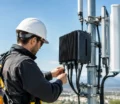
For vehicle installations, antenna placement is often the bigger issue. A poorly located antenna beside metal equipment, behind a cab, or on a compromised mount can produce an uneven radiation pattern and weak performance in the direction that matters most. A professional installation should account for the vehicle body, mounting surface, cable routing, and the environment where the vehicle works.
Use channels appropriately
CB users share 40 channels, so courtesy is operationally useful as well as legally wise. Channel 9 is reserved for emergency communications and traveler assistance. It should not be used for routine dispatch, casual conversations, or business traffic.
Channel 19 has long been associated with highway traffic and trucking communications. That convention is not the same as exclusive channel ownership, but it is worth respecting when a team depends on clear highway information. There are no private or exclusive CB channels, and users should not claim a channel as their own.
Keep communications brief, clear, and relevant. Avoid intentionally interfering with other stations, transmitting music or entertainment, using obscene language, or sending false distress calls. CB is a voice communications service, not a broadcast platform.
What Businesses Should Know Before Relying on CB
CB can be a practical, low-cost option when crews are close together and need simple vehicle-to-vehicle communications. A landscaping crew moving equipment around a large property, a farm coordinating tractors, or a convoy traveling rural roads may find it useful. It does not require cellular service, monthly airtime charges, or an FCC licensing workflow.
The trade-off is that CB is open to everyone, coverage is variable, and channel congestion can be significant in some areas. Range depends on terrain, antenna quality, vehicle installation, weather, electrical noise, and the activity of the ionosphere. A mobile CB setup may work well across a job site or along a stretch of highway, yet be unreliable through dense buildings, over hills, or across a metro area.
CB also has no privacy. Anyone tuned to the same channel can listen. That makes it a poor choice for personnel details, customer information, security coordination, or sensitive operational traffic. Scrambling and encryption are not permitted on CB, so the right solution is not to modify the system. It is to select a service designed for the required level of control and coverage.
For recurring fleet dispatch, multi-site operations, or teams that need dependable coverage beyond line of sight, a licensed business radio system, DMR system, or Push-to-Talk over Cellular solution may be a better fit. GMRS can be useful for families and certain organized groups, but it has a different licensing structure and is generally not the default choice for routine business operations. Amateur radio offers technical flexibility, but it is not intended for business communications.
The service should match the mission. CB works best when its strengths – immediate, local, shared communications – align with the operating environment.
A Practical CB Compliance Check
Before putting CB radios into service, verify that the radios are FCC-certified CB models and that no amplifiers or unauthorized modifications are involved. Confirm the antenna installation is mechanically secure, properly tuned, and within applicable height limits. Then establish simple team practices: use plain language, keep transmissions short, stay off Channel 9 except for emergencies, and avoid sharing information that should not be public.
It is also smart to test the system where it will actually be used. A radio check in a parking lot does not tell you how the installation will perform behind a warehouse, across a field, inside a quarry, or on the far side of a delivery route. Test the farthest expected locations, note interference sources, and decide whether a single shared CB channel can support the team without disrupting other users.
For organizations adding radios to vehicles, consistency matters. Similar antenna locations, cable quality, microphone setups, and installation standards make troubleshooting far easier. One weak truck installation can create the impression that the entire system is unreliable.
When Expert Help Is Worth It
CB is simple to license because no individual license is normally required. Designing reliable communications is a different question. The most common failures are not paperwork failures. They are poor antenna placement, electrical noise, incorrect tuning, unrealistic range expectations, and choosing CB for a job that needs a more controlled system.
Cogent Radios Group helps customers evaluate those practical factors before a radio purchase becomes a field problem. The goal is not to make a simple system complicated. It is to make sure the equipment, installation, and operating rules fit the work your team actually does.
A well-installed CB can be an effective tool when crews need nearby, open communications. When coverage, privacy, or dispatch reliability becomes mission-critical, treating that limitation as useful information is the first step toward choosing the system that will keep people connected.