

A repeater that sounds great on the bench can turn into a noisy, desensing headache the moment it goes on a tower. That is why amateur radio repeater setup is less about buying a transmitter and receiver and more about building a system where every piece works together under real conditions.
For many hams, the goal is simple – better handheld coverage, more reliable mobile access, or a dependable local machine for emergency and community use. The challenge is that repeaters live or die by details. Feed line loss, antenna placement, duplexer tuning, grounding, and even cabinet layout can matter as much as the radio itself.
What an amateur radio repeater setup actually includes
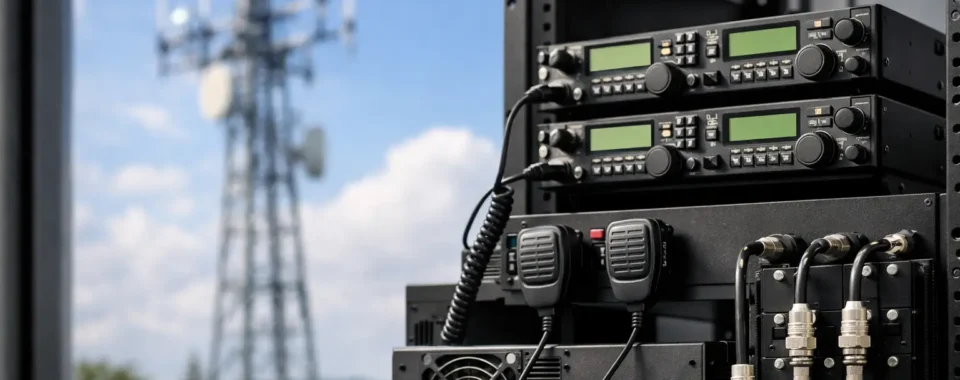
At its core, a repeater receives a signal on one frequency and retransmits it on another. In practice, the system usually includes a receiver, transmitter, controller, duplexer, power supply, battery backup, feed line, antenna, grounding system, and some form of shelter or rack environment.
That sounds straightforward, but the weak points usually show up where those parts interact. A great receiver paired with a poor duplexer can perform badly. A strong transmitter feeding a lossy coax run may produce disappointing coverage. A solid antenna mounted too low can leave dead zones where users expect full quieting.
This is why experienced installers think in terms of system performance, not just equipment specs. The repeater is not one box. It is a coordinated RF installation.
Start with the coverage goal, not the shopping list
Before choosing gear, define what success looks like. Are you trying to cover a small town with handhelds, improve mobile access across a county, or build a club machine that favors a few known operating areas? Those are different projects, and they lead to different equipment and site choices.
A common mistake is overbuilding the transmitter while underestimating height and receive performance. In repeater work, antenna elevation often does more for useful coverage than adding transmitter power. The user with a 5-watt handheld still has to get into the machine. If the repeater hears poorly, a bigger transmitter does not fix that.
Terrain matters too. Flat rural areas, dense trees, urban clutter, and ridgelines all change how signals behave. Coverage maps can help, but field testing and local experience are often more valuable than theoretical predictions alone.
Site selection is where most repeater performance is won or lost
The best radio package in the world cannot make up for a poor site. Height above average terrain, low local noise, clean power, and physical security all affect long-term reliability.
A good site gives the antenna a clear view of the intended service area and keeps the receive side away from avoidable interference. That might mean a commercial tower, a hilltop building, or a smaller local structure if the coverage target is modest. The right answer depends on your goal and your budget.
There are trade-offs. High-profile tower sites can deliver excellent range, but they may also bring lease costs, coordination issues, and more RF density from nearby systems. A lower, quieter site may actually produce a cleaner receive environment for some local applications. The best choice is not always the tallest one available. It is the site that supports consistent real-world access.
The heart of the amateur radio repeater setup
Most modern repeaters use either a dedicated integrated repeater or separate commercial-grade receiver and transmitter units tied together with a controller. Integrated repeaters are simpler and often a good fit for smaller systems. Separate stations can offer better flexibility, serviceability, and receiver performance, especially in demanding RF environments.
Receiver quality deserves extra attention. Sensitivity matters, but selectivity and resistance to desense matter just as much. A repeater located near other transmitters can suffer badly if the receive side is not protected and filtered properly.
The controller handles station ID, hang time, courtesy tones, time-out timer, and sometimes remote control or linking functions. It does not have to be fancy, but it does need to be reliable. A repeater used for emergency support or routine community traffic should behave predictably every time someone keys up.
Duplexer tuning is not optional fine print
In a standard same-band repeater, the transmitter and receiver share one antenna through a duplexer. That means the duplexer must sharply isolate the transmitter energy from the receiver while passing both frequencies with minimal loss.
This is one of the places where homegrown approximations usually cause trouble. A poorly tuned duplexer can make the repeater deaf, unstable, or noisy. The problem may not be obvious at first. On-air reports might sound decent in one area while weaker users struggle to bring up the machine.
Proper tuning requires the right test equipment and an understanding of insertion loss, notch depth, and isolation. Even after bench tuning, final verification at the site matters because feed line, antenna condition, and the local RF environment all affect performance.
Antenna and feed line choices matter more than many operators expect
The antenna is where your system meets the air, and small compromises here often produce large performance penalties. A repeater antenna should be durable, low loss, and appropriate for the frequency band and coverage pattern you want. Omnidirectional vertical antennas are common, but gain and pattern need to match the application.
More gain is not always better. In flat terrain, it can help. In hilly areas, a very compressed pattern may overshoot users below the site. This is a classic it-depends decision, and it is one reason local system knowledge matters.
Feed line loss is another quiet system killer. On VHF and especially UHF, long coax runs with lower-grade cable can waste a surprising amount of signal on both transmit and receive. Better hard line or premium low-loss coax often pays for itself in repeater performance. Good connectors, weather sealing, and proper strain relief are just as important.
Power, backup, and grounding for real reliability
A repeater that only works when utility power is clean and the weather is calm is not much of a community asset. Stable DC power, surge protection, and battery backup should be part of the initial plan, not an afterthought.
A quality power supply sized for continuous duty helps prevent voltage-related issues. Battery backup gives the system a chance to stay up during outages, which is often when users need it most. Some systems also add generators or solar support, depending on site conditions.
Grounding deserves careful attention. Proper grounding and bonding help with safety, lightning protection, and RF stability. Poor grounding can contribute to noise problems and equipment damage. This work needs to be done methodically, especially at tower or rooftop sites.
Coordination, legal details, and operating discipline
An amateur repeater is not just a technical project. Frequency coordination, station identification, control operator requirements, and band-specific rules all matter. In the US, coordination practices vary by region, but working with the recognized local coordination body is the smart move.
Even if a coordinated pair is available, local operating habits and neighboring systems should be considered. A technically legal repeater can still become an operational nuisance if it creates avoidable interference or uses settings that make it unpleasant to share spectrum with others.
This is also where tone access, time-out timers, and sensible controller programming help. Good setup supports the community. Bad setup creates friction.
Testing and troubleshooting after installation
Once the system is on the air, the job is not finished. Initial coverage testing should include handheld and mobile checks in expected use areas, not just reports from strong local stations. Audio quality, receive threshold, courtesy behavior, and tail noise all deserve attention.
If performance is weak, the cause is often one of a few familiar issues: desense, feed line loss, poor antenna placement, inadequate grounding, or an unrealistic coverage expectation for the site. Sometimes the fix is technical. Sometimes it means revisiting the original goal and matching the system to what the location can actually support.
This is where practical experience saves time. A repeater can pass basic bench tests and still fail in the field because repeaters operate in the real RF world, not a lab vacuum.
When to build it yourself and when to get help
Some repeater owners enjoy designing and maintaining every part of the system. That makes sense if you have the tools, the site access, and the technical depth to tune and troubleshoot properly. It is part of the appeal of amateur radio.
But there is no prize for forcing a complex installation into a DIY box when the stakes are higher. If the repeater supports emergency communications, public events, a wide user base, or a difficult RF site, getting experienced help can save money and frustration. Companies like Cogent Radios Group work in that space where equipment knowledge meets real infrastructure support, and that combination matters when reliability is the priority.
A good repeater earns trust one transmission at a time. If you plan your amateur radio repeater setup around coverage goals, site quality, clean RF practices, and long-term serviceability, you give that system a real chance to become the machine people count on when they need it most.