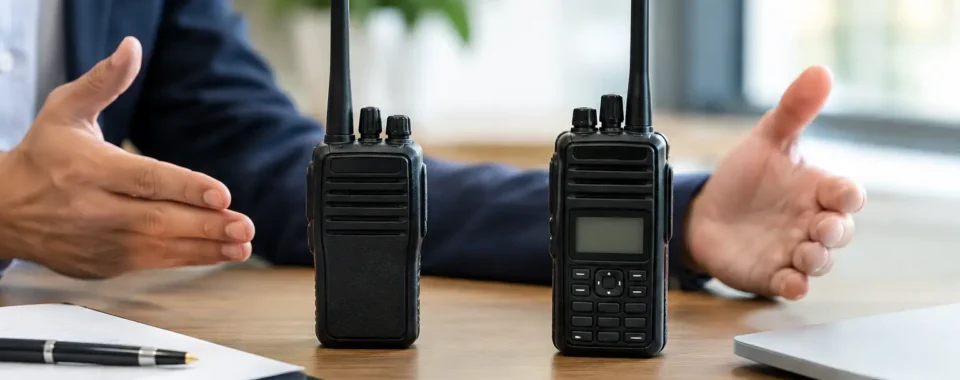

A failed handheld radio in the middle of a shift is not a budget line item. It can mean a missed delivery, an isolated maintenance technician, a delayed guest response, or a crew working without direction. That is why the radio leasing versus buying decision should start with how your team works, not simply with the monthly payment or equipment price.
For organizations using professional two-way radios or Push-to-Talk over Cellular (PoC), both options can make sense. Buying usually offers the strongest long-term value for stable operations. Leasing can preserve capital, simplify refresh cycles, and provide flexibility when staffing or projects change. The better choice depends on your operating timeline, coverage requirements, support needs, and willingness to manage equipment over time.
Radio Leasing Versus Buying: Start With the Job
Before comparing quotes, define what the radios must accomplish each day. A construction contractor with a permanent crew has a different need from an event company that scales up for a few weekends each month. A regional delivery operation may need nationwide PoC coverage, while a manufacturing facility may need DMR radios that work reliably throughout a building and across a yard.
Consider how many users need radios, where they work, whether headsets and vehicle accessories are required, and what happens when a device is lost or damaged. Also determine whether your operation needs dispatch, GPS location, recording, group calling, emergency alerts, or connections to existing radio infrastructure. These decisions shape the actual cost much more than the purchase price of a handheld alone.
A system that is undersized creates daily friction. A system that is overbuilt ties up money in features and capacity your team will not use. A practical assessment of the job is the foundation for either leasing or purchasing.
When Buying Radios Makes Financial Sense
Buying is often the right path for organizations with predictable, long-term communications needs. Once the equipment is paid for, the ongoing costs are generally limited to service, repairs, replacement batteries, accessories, licensing where applicable, and any recurring airtime or software subscriptions.
This structure can produce a lower total cost of ownership when radios will remain in service for several years. Professional DMR equipment, properly selected and maintained, can serve a stable team for a long time. Organizations with a fixed facility, established fleet, or permanent field operation often prefer the control that ownership provides.
Ownership also gives you more freedom to configure the system around your operation. You can add radios as the team grows, use compatible accessories across your fleet, deploy repeaters, and make changes on your schedule. If you own FCC-licensed business radio equipment, you retain the responsibility to operate it within the terms of the license, but you also have direct control over that asset.
The trade-off is the upfront investment. Buying may require a significant capital outlay when you need dozens or hundreds of radios, chargers, spare batteries, mobile units, or infrastructure. Your staff also needs a plan for inventory, programming, repairs, and eventual replacement. Equipment ownership is not set-it-and-forget-it, especially in demanding environments where radios are exposed to weather, dust, vibration, and hard daily use.
Buying works well when your needs are stable
Purchase is commonly a good fit when your radio count is relatively consistent, the same team uses the equipment year-round, and you expect to keep the radios for several years. It is also attractive when your organization already has a maintenance process or wants to build a long-term communications system around owned infrastructure.
For many operations, the key question is simple: Will these radios still be serving the same role three to five years from now? If the answer is yes, buying deserves serious consideration.
When Leasing Radios Is the Better Operational Choice
Leasing shifts more of the cost into a predictable monthly or periodic expense. That can help a business deploy a professional communications system without delaying the project until capital funds are available. For operations managers, predictable costs can be easier to plan around than a large one-time purchase.
Leasing can be particularly useful for temporary projects, seasonal operations, rapidly growing teams, and organizations that need to preserve cash for vehicles, staffing, inventory, or other priorities. A site that is opening quickly may need a communications solution now, not after the next capital planning cycle.
It can also reduce the risk of being stuck with equipment that no longer fits the operation. Technology changes, workforces expand, and coverage requirements evolve. With the right lease structure, a team may be able to refresh devices at the end of the term rather than trying to stretch older equipment beyond its useful service life.
That flexibility matters with PoC radios. Because these devices rely on cellular connectivity and often include management platforms, GPS, and dispatch features, an organization may prefer a plan that keeps hardware, service, and future upgrades aligned. The precise terms vary, so do not assume every lease includes airtime, repairs, programming, accessories, or replacement devices.
Leasing requires close contract review
A low monthly number does not always equal a low overall cost. Ask about the lease term, early termination provisions, end-of-term options, damage coverage, replacement procedures, and whether the equipment can be purchased later. Confirm who owns the radios at the end of the agreement and what condition they must be in when returned.
Also clarify support. If a radio stops working, your operation needs to know whether a replacement is available, how quickly it can be programmed, and whether a technician can help diagnose whether the problem is the device, coverage, user training, or system configuration. A lease can be valuable when it includes meaningful service, but only if those responsibilities are clearly defined.
Compare the Full Cost, Not Just the Radio Price
The most useful comparison puts every expected cost on the same timeline. For a purchase, include equipment, programming, installation, chargers, accessories, licensing, infrastructure, maintenance, spares, and subscriptions. For a lease, include recurring payments, service fees, cellular or platform charges, overage costs, damage fees, and end-of-term obligations.
Do not overlook downtime. A less expensive radio that fails frequently, has poor battery life, or does not provide coverage where crews work can cost more than a durable professional unit. The value of dependable communication is often seen in faster dispatch, fewer repeat trips, safer lone-worker procedures, and less time spent trying to reach the right person.
For a fleet operation, GPS and group calling may improve coordination enough to justify a higher monthly PoC service cost. For a single campus with challenging indoor coverage, a well-designed DMR system may offer better long-term economics than relying on cellular service. The right answer comes from matching technology to the actual work environment.
Questions to Settle Before You Commit
Your decision should be easier after you can answer four practical questions: How long will we need this system? How much equipment do we need at peak usage? What level of support and replacement response can the operation tolerate? And what changes are likely during the next few years?
If a project lasts six months, leasing or a short-term rental arrangement may protect you from owning equipment that will sit unused afterward. If your staff uses the same radios every day at a permanent location, purchasing may return more value over time. If your coverage area extends across states, a PoC solution with nationwide cellular service may be more useful than traditional radio infrastructure, regardless of whether the devices are leased or purchased.
It is also worth asking whether your team needs training. Clear channel plans, sensible talk group assignments, accessory selection, charging practices, and emergency procedures all affect how well a radio system performs. The equipment is only one part of dependable communications.
Choose the Option That Supports the Work
Radio leasing versus buying is not a contest between a good option and a bad one. It is a choice between two ways to fund and manage an operational tool. Purchase favors control and long-term value when the need is steady. Leasing favors flexibility and predictable expenses when the need is changing or capital must stay available.
A knowledgeable communications partner can help model both paths against your coverage, user count, infrastructure, and support requirements. The best arrangement is the one that keeps your people connected at the moment a clear, dependable call matters most.