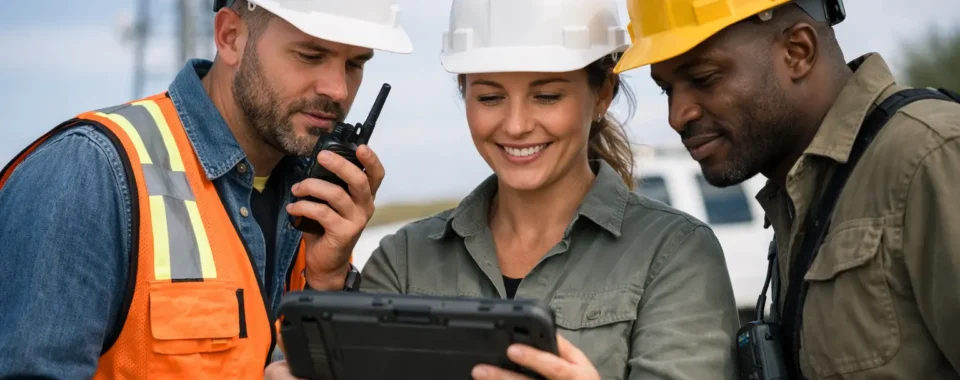

A missed call between a driver and dispatcher can mean a late delivery, an idle crew, or a safety issue nobody hears about until it has grown. That is why a PoC platform review should start with the work your team performs, not a feature checklist. Push-to-Talk over Cellular can give geographically dispersed teams fast group voice communication without building a conventional radio network, but the experience depends on more than the handset in a user’s hand.
For operations that rely on quick decisions, a PoC system should feel like a professional radio service: press, speak, release, and move on. The platform behind it determines who can talk, which groups they can reach, how dispatch sees activity, what happens when a device is lost, and whether coverage is adequate where the work actually occurs.
What a PoC Platform Actually Includes
A PoC platform is the service environment that connects radios, smartphones, dispatch consoles, user accounts, and administrative controls over cellular data or Wi-Fi. It is not simply an app. A complete solution usually combines the platform subscription, purpose-built PoC radios, carrier connectivity, accessories, device management, and a support plan.
That distinction matters when comparing offers. One provider may quote a low monthly software rate but leave device programming, group setup, carrier activation, and ongoing technical support to the customer. Another may supply a configured system that is ready for the field. Neither approach is automatically better. A small team with an experienced administrator may prefer direct control, while a multi-site operation may value a partner that handles deployment and changes.
Traditional two-way radio and PoC also solve different coverage problems. DMR, GMRS, and other RF radio systems can provide excellent local communications and can continue to operate independently of commercial cellular networks. PoC extends communication wherever users have suitable LTE or 5G data service, making it particularly useful for fleets, traveling supervisors, regional service teams, and teams spread across multiple properties. Some organizations need both.
PoC Platform Review: The Criteria That Matter
The best review asks what can fail during a normal shift, then tests the platform against that reality. Coverage, call behavior, administration, hardware, and support deserve more weight than a long list of rarely used features.
Coverage must be verified, not assumed
“Nationwide coverage” is useful shorthand, but it is not a guarantee of service in every parking structure, warehouse, rural road, basement, or remote job site. A PoC radio works through carrier data coverage, Wi-Fi, or both. If the network is weak where crews load equipment or where drivers regularly travel, communication quality can suffer.
Start with actual locations: facilities, routes, customer sites, work zones, yards, and travel corridors. Consider whether a single-carrier device is sufficient or whether multi-carrier capability provides worthwhile redundancy. Wi-Fi can improve indoor performance, but it needs proper network access and configuration. In remote areas with limited cellular service, conventional radio, a repeater, satellite communications, or a hybrid plan may be the better answer.
A realistic trial is more useful than a desktop coverage map. Test indoors and outdoors, at busy times, while traveling, and at the edges of your normal service area. Ask users to make individual, group, and emergency calls. Their feedback will reveal problems a specification sheet cannot.
Group calling should match the organization chart
PoC earns its place when it reduces call routing and repeat messages. A dispatcher should be able to reach all drivers, a single route, a maintenance crew, or one supervisor without rebuilding groups every day. The platform should support the way work is organized, including temporary incident groups when needed.
Look closely at group permissions. Can a user belong to several groups without hearing traffic from all of them at once? Can supervisors monitor selected groups? Can dispatch make a priority or emergency call? Can administrators restrict sensitive channels to authorized personnel? These controls are particularly valuable in logistics, security, hospitality, public works, and event operations where teams overlap but should not all share the same traffic.
Also ask about call priority and queuing. Cellular push-to-talk is not identical to direct radio-to-radio communication. Audio is carried through a network and platform, so the provider’s call handling design affects how quickly a user receives the floor and how competing transmissions are managed. Test it with several people talking during a busy period.
Dispatch tools need to help, not distract
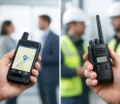
A dispatch console can turn a radio system into an operational coordination tool. At a minimum, it should make group selection, individual calling, presence status, and message history easy to understand. For fleet users, mapping and location updates may be valuable. For a warehouse or hotel, voice groups and quick contact may matter more than a map.
Location features require thoughtful policy. GPS reporting can help locate a driver who needs assistance, confirm a crew has reached a job site, or direct the nearest technician to a service call. It can also create unnecessary concern if employees do not understand when tracking is active, who can view it, and how long information is retained. Set clear operating rules before deployment rather than treating location data as an afterthought.
Do not buy a sophisticated console simply because it is available. If one coordinator manages ten users, a simple interface may be faster and easier to support. If a dispatch center handles multiple regions and hundreds of radios, audit trails, mapping layers, recording options, and role-based access may justify a more advanced platform.
Device quality affects every call
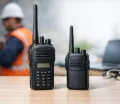
Consumer smartphones can run many PoC applications, but they are rarely the best field radio. A dedicated PoC device provides a physical push-to-talk button, loud audio, better accessory options, and a form factor designed for gloved hands, vehicle mounts, and routine drops. For many teams, those basics matter more than screen size.
Evaluate speaker volume in a running truck, loading dock, kitchen, construction site, or crowded venue. Check battery performance over a full shift with normal location reporting and voice use. Confirm that chargers, remote speaker microphones, earpieces, belt clips, and vehicle kits fit the task. An inexpensive device that needs daily troubleshooting or frequent replacement is not inexpensive in practice.
Durability ratings deserve context. Water and dust resistance can be valuable, but so can a simple charging process and a battery replacement policy that keeps spare units available. A radio used by delivery drivers has different needs than one carried by a facilities manager indoors.
Administration and support determine long-term value
Most PoC systems are easy to launch with a few users. The test comes six months later, when staff changes, a radio is misplaced, a new site opens, or a supervisor needs a temporary talk group for a project. Your administrator should be able to add, remove, suspend, and assign users without creating security gaps or extended downtime.
Ask how lost devices are handled. Can access be suspended immediately? Can the device be located, remotely managed, or wiped where appropriate? Clarify who owns the account configuration and whether your organization can access its own user and billing records.
Support is not a minor detail for mission-critical communications. Confirm who assists with device replacement, carrier issues, group programming, firmware updates, and dispatch-console questions. A provider that understands both radio operations and cellular-based PoC can help identify whether a problem is caused by coverage, hardware, account settings, accessories, or user training. That saves time compared with passing an issue among several unrelated vendors.
Cost Should Be Measured Per Working User
A useful PoC budget includes more than the monthly service charge. Factor in radios, activation, accessories, chargers, spare batteries, vehicle mounts, setup, training, management time, and replacement units. For larger teams, also consider dispatch licenses, mapping services, recording requirements, and administrative roles.
The lowest per-device price can become costly when it delivers poor audio, limited support, or a configuration that does not reflect daily operations. On the other hand, paying for advanced features no one uses wastes money just as effectively. Build the system around the job, then select the service level that supports it.
A pilot group can prevent both mistakes. Include users who work in difficult conditions, not only office staff. Measure call reliability, response time, battery life, coverage gaps, and the number of times people revert to personal phones. Those results provide a better purchasing case than general claims about coverage or features.
When PoC Is the Right Choice
PoC is often a strong fit when teams operate across a city, state, or nationwide footprint and need instant group communication without the cost and complexity of constructing a private radio network. It works well for transportation, mobile service, property management, event staffing, private security, agricultural operations with cellular availability, and organizations coordinating multiple sites.
It may be less suitable as the only communications method where cellular service is inconsistent, during disaster scenarios that could affect public networks, or at a single large property that needs guaranteed on-site RF coverage. In those cases, a conventional radio system or a combined radio and PoC design deserves serious consideration.
Cogent Radios Group approaches this decision as a communications design question rather than a box-sale question. The right answer may be a nationwide PoC deployment, a local DMR system, or a practical mix of both.
Before committing, put the proposed system in the hands of the people who will depend on it during a demanding shift. If they can hear clearly, reach the right group quickly, and keep working without fighting the equipment, you have a platform worth building on.