

A phone in a protective case is not automatically a field communications tool. The best rugged PoC devices are purpose-built around the way crews actually work: clipped to a vest, operated with gloves, exposed to rain and dust, and expected to last through a full shift without a charger nearby. For a fleet, jobsite, security team, or distributed operation, that difference directly affects response time and accountability.
Push-to-Talk over Cellular combines the familiar simplicity of a two-way radio with wide-area communication over cellular and Wi-Fi networks. The right device can give an authorized team nationwide coverage without building a private radio network. The wrong one can leave users fighting small touch screens, weak audio, dead batteries, or inconsistent carrier coverage at the exact moment a quick group call matters.
Best Rugged PoC Devices Start With the Job
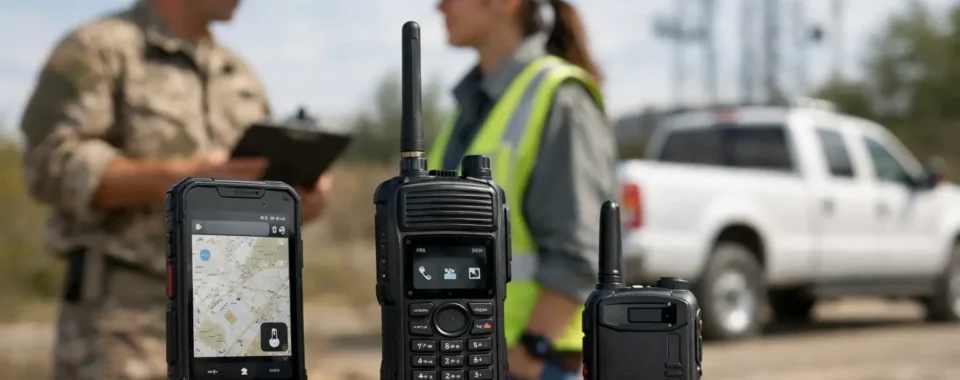
There is no single handheld that is best for every organization. A warehouse supervisor, a construction foreman, a delivery driver, and a hospital security officer have different requirements, even when all use the same PoC platform. The first decision is whether workers need a radio-first handheld, a rugged Android smart device, a vehicle-mounted mobile unit, or a compact wearable.
A radio-first PoC handheld is usually the right starting point for teams that primarily need instant voice communication. It has a large, dedicated PTT button, physical volume control, loud front-facing audio, and a display sized for contacts, groups, and status information. Training is minimal for employees already familiar with two-way radios, and the controls remain usable when gloves or wet hands make touchscreens inconvenient.
Rugged Android PoC devices make more sense when voice is only one part of the workflow. These units can support dispatch software, mapping, work orders, barcode scanning, photos, video, and messaging alongside PTT. They cost more and require more deliberate device management, but they can reduce the number of tools a technician or supervisor carries.
Vehicle units belong in the conversation for drivers and mobile equipment operators. A fixed PoC radio with an external antenna, power tied to the vehicle, and a proper speaker microphone is often more practical than asking a driver to handle a handheld while moving. Wearable PoC devices can be useful for security, hospitality, and event staff who need discreet communications, but their smaller controls and batteries require an honest field trial.
What to Compare Before Selecting a Rugged PoC Radio
A specification sheet is useful, but it should not decide the purchase by itself. Focus on the conditions that cause ordinary devices to fail or frustrate users.
Environmental protection and physical design
Look for an IP rating that fits the actual exposure. IP67 generally indicates meaningful dust protection and temporary water immersion protection, while IP68 may support deeper or longer immersion under the manufacturer’s stated conditions. Neither rating means a device is invincible. Saltwater, chemicals, pressure washing, worn port covers, and damaged batteries can still create problems.
For construction, utilities, agriculture, and outdoor maintenance, a documented drop rating is equally important. Ask what surface and height the test covers. A device that survives a controlled drop onto plywood may not react the same way after repeated falls onto concrete, steel decking, or gravel.
Also handle the radio before deploying it. The PTT button should be easy to find without looking, resistant to accidental presses, and usable with required gloves. A heavily protected device that is awkward to grip becomes a problem when employees must use it hundreds of times each day.
Audio that cuts through the worksite
Audio is where many supposedly rugged devices disappoint. A high speaker-output figure is helpful, but it does not tell the full story. Test speech clarity around idling trucks, machinery, wind, crowd noise, and the sounds inside the actual work environment.
Noise-canceling microphones, speaker placement, and accessory options matter as much as volume. A remote speaker microphone can make a radio more convenient on a belt or vest, but it also adds a cable and connector that must be protected and maintained. For especially loud environments, consider compatible earpieces or hearing-protection headsets rather than assuming a louder speaker solves every issue.
Battery reality, not battery claims
A stated 12-hour or 16-hour battery estimate depends on network conditions, screen use, group-call activity, GPS reporting, and accessory use. A PoC device working hard to maintain a weak cellular connection may consume power far faster than it does in a strong coverage area.
For long shifts, look for removable batteries, multi-unit charging options, and a practical spare-battery plan. A fleet that returns to the same depot may do well with charging banks and assigned radio slots. Field service teams that begin at home and travel across a region may need vehicle charging and spare batteries. Battery operations are part of the communications system, not an afterthought.
Carrier coverage and network behavior
PoC coverage follows the cellular and Wi-Fi networks available to the device. That can be a major advantage over local radio coverage, but it still demands testing. A national carrier map cannot account for metal buildings, underground areas, rural terrain, remote loading yards, or the interior of a moving vehicle.
Evaluate the device and service plan on the routes and properties your team uses. If the operation crosses several states or moves between rural and urban areas, multi-carrier capability can provide valuable resilience. Wi-Fi support may improve indoor coverage, but the Wi-Fi network must be reliable and configured to support voice traffic.
Ask how the platform behaves when coverage drops. Does the user receive a clear indication that a call did not go through? Are missed calls, text messages, and location updates handled appropriately once connectivity returns? Those details shape employee confidence in the system.
Safety, dispatch, and management features
The right feature set depends on the work, but several capabilities deserve a close look: emergency alerting, man-down or lone-worker functions, GPS location, call recording where permitted, dispatch console access, geofencing, and remote device administration. Each should be configured around a real operational policy.
For example, an emergency button is useful only if the organization has defined who receives the alert, what location information is available, and how they respond. Likewise, location tracking may help dispatch vehicles or protect lone workers, but it requires clear employee communication and appropriate privacy practices.
Four Device Types Worth Shortlisting
Rather than buying by brand name alone, build a shortlist across the form factors that match your workforce.
- Radio-first handheld PoC radios suit security, construction, logistics, facilities, and event teams that need frequent group voice calls and simple controls.
- Rugged Android handhelds suit supervisors, inspectors, field technicians, and utilities personnel who need apps, maps, forms, camera functions, and PTT in one device.
- Vehicle-mounted PoC mobiles suit transportation, delivery, towing, service fleets, and equipment operators who benefit from external antennas and vehicle power.
- Wearable or compact PoC units suit hospitality, retail, event operations, and executive protection where discretion and light carry weight matter more than a large screen.
A mixed deployment is often the most efficient answer. Dispatchers and supervisors may need Android devices or computers, drivers may need vehicle mobiles, and crew members may be better served by straightforward radio-style handhelds. A shared platform can still keep them in the same talk groups.
Test Devices With the People Who Will Use Them
The strongest purchasing process is a controlled field trial, not a conference-room comparison. Assign test units to representative users for several shifts. Include the noisiest locations, weakest coverage areas, cold or wet conditions where relevant, and the longest normal workday.
Give testers a short evaluation form, but also watch how they naturally use the devices. Do they miss the PTT button? Do they turn the volume down because the speaker is harsh? Are they using the assigned carry accessory, or leaving the unit in a truck because it is uncomfortable? These observations often reveal more than a feature checklist.
Document call quality, battery performance, coverage exceptions, and accessory issues. Then determine whether those issues are correctable through configuration, a different carrier option, better accessories, or a different device type. Do not expect a hardware change alone to fix an unclear talk-group plan or an unreliable building Wi-Fi network.
Plan the System, Not Just the Purchase
A PoC deployment needs user groups, naming conventions, emergency procedures, charging responsibility, replacement procedures, and basic training. For larger organizations, it may also need integration with dispatch workflows and clear authority over who can create or change talk groups.
This is where experienced communications support has real value. Cogent Radios Group can help match the device, coverage approach, accessories, and operational setup to the work at hand instead of treating PoC as a one-size-fits-all product purchase.
The best choice is the device your team can hear, operate, carry, charge, and trust on its hardest day. Start with the places where communication breaks down now, put representative devices in those conditions, and let field performance guide the final decision.