
A business radio system can sound perfectly clear in a warehouse test and become unusable once it reaches the field. A nearby licensee, an overlooked repeater input, or a coverage area that extends beyond the original plan can create interference problems that are costly to correct. This FCC frequency coordination guide explains how frequency coordination works for business radio systems and how to prepare before submitting an FCC application.
For most Part 90 private land mobile radio applicants, coordination is not a paperwork formality. It is the engineering step that connects a requested channel, system design, operating area, and proposed technical parameters to the existing spectrum environment.
What FCC frequency coordination actually does
Frequency coordination is the process of having an FCC-certified frequency coordinator review a proposed radio operation and recommend frequencies that can work within the applicable FCC rules. The coordinator evaluates the request against existing license records, regional channel use, frequency pool rules, and interference considerations.
The coordinator does not issue the license. The FCC remains the licensing authority, and it can approve, return, modify, or deny an application. A favorable coordination recommendation is still a critical part of many conventional Part 90 applications because it demonstrates that the request was evaluated for compatibility with other spectrum users.
For a fleet, construction company, security operation, hotel, school district, utility contractor, or event organization, coordination helps answer practical questions before equipment is programmed: Which channels are realistic for this location? Can a repeater be used? Will the system be shared with other users? What power level and antenna height are supportable?
When coordination is required – and when it is not
Most business and industrial land mobile radio applications under FCC Part 90 require frequency coordination. This commonly includes VHF and UHF systems used for dispatch, operations, maintenance, security, transportation, and on-site communications. Requirements vary by radio service, frequency pool, location, and type of operation, so the right answer is not always the same for every applicant.
Some services operate differently. FRS, CB, and MURS are generally license-by-rule services and do not use individual frequency coordination. GMRS requires an FCC license, but the standard personal GMRS license process does not use Part 90-style coordination. Amateur repeaters may be coordinated by local amateur frequency coordination groups, but that voluntary coordination is separate from an FCC amateur license.
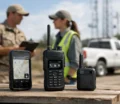
Push-to-Talk over Cellular also changes the equation. A PoC radio uses commercial cellular networks rather than a business-owned Part 90 RF channel, so a company normally does not need to coordinate a new land-mobile frequency for the PoC service itself. That can be a practical alternative where broad coverage and fast deployment matter more than owning and maintaining local RF infrastructure.
Start with the operating problem, not the channel
The fastest way to create a weak coordination request is to begin by asking for a specific frequency without defining the system’s real purpose. Coordinators need technical details, but good technical details start with the operating requirement.
Consider how many users need to talk at the same time, where they work, and whether they are mobile, indoors, outdoors, or spread across multiple sites. A delivery fleet may need reliable mobile coverage across a metro area. A manufacturing campus may need building penetration and short, dependable talk paths. A countywide event operation may need temporary coverage, separate talk groups, and a plan for mutual aid.
A simplex channel can be appropriate for close-range work, temporary job sites, and low-cost operations. A repeater can extend coverage and improve handheld usability, but it adds site, antenna, backhaul, power, maintenance, and licensing considerations. Digital systems can add features such as individual calling, text messaging, and better channel efficiency, but they still must be designed around the coverage and capacity the team actually needs.
Information to prepare for a coordinator
A complete request reduces back-and-forth and gives the coordinator a more accurate picture of potential interference. Before starting, collect the following details:
- The legal applicant name, business type, contact information, and a clear explanation of the operational need.
- Each fixed site address and coordinates, plus the intended mobile operating area or service radius.
- The number and type of radios, including mobiles, portables, control stations, base stations, and repeaters.
- Proposed technical parameters such as frequency band, power, antenna height, antenna type, emission designator, bandwidth, and analog or digital operation.
- The desired communications arrangement, including simplex, repeater, conventional shared use, trunked operation, or temporary deployment.
Do not guess at the technical details if you are unsure. An antenna installed 20 feet higher than planned, a different emission type, or a larger service area can materially change the coordination analysis. A qualified radio provider or licensing consultant can help translate an operational need into parameters that are both useful and realistic.
Location details matter more than many applicants expect
For a fixed repeater, the coordinator needs the actual transmitter location, antenna centerline height, and power information. For mobile-only systems, the service area matters because mobiles travel. A request that says “statewide” when the company operates within two counties can complicate the analysis and may lead to unnecessary restrictions or a less suitable channel recommendation.
Be precise without understating the need. If crews routinely work at satellite facilities, customer sites, or distant yards, include that information. Coordination works best when the described area reflects real operations rather than an idealized map or a vague future possibility.
Shared channels, exclusive use, and interference expectations
Many business radio channels are shared. Sharing does not mean a system is poorly designed. It means other eligible licensees may be authorized on the same or nearby frequencies, subject to geographic separation, operating rules, and technical limits. In congested markets, shared operation may be the most practical path to obtaining usable spectrum.
An exclusive-use expectation should be discussed early, especially for dispatch-heavy operations, safety-sensitive functions, or systems with high daily airtime. Even when a channel is coordinated for a particular area, no radio system is immune to every source of interference. Improperly programmed radios, unlicensed users, distant propagation, adjacent-channel activity, and local electronic noise can still affect communications.
That is why frequency coordination should be paired with sound system design. Proper antenna placement, quality feed line, correct power settings, receiver filtering where needed, and disciplined radio programming often matter as much as the selected channel.
Common mistakes that delay an FCC application
A frequent problem is treating a coordination recommendation as permission to transmit. Do not place a new Part 90 frequency into regular operation until the FCC authorization is granted and the station is operating within the licensed parameters.
Another issue is requesting more coverage, power, or channels than the operation can justify. Bigger specifications are not automatically better. Higher antenna elevations and greater effective radiated power can increase the interference footprint, narrowing the coordinator’s options. A well-designed system usually starts with the coverage requirement, then uses the least intrusive technical approach that reliably meets it.
Applicants also run into trouble when their equipment plan and application do not match. For example, a digital DMR repeater, an analog-only authorization, and radios programmed for different bandwidths are not details to sort out after installation. Align the radio platform, emissions, channel plan, and license request before equipment is deployed.
After the license is granted
Keep a copy of the authorization and make sure the programming template reflects the approved frequencies, emission designators, power limits, and site information. Train supervisors and radio users on the purpose of each channel, particularly when channels are shared or assigned to separate work groups.
Treat changes as licensing questions before they become field changes. Moving a repeater, increasing antenna height, changing power, adding locations, expanding coverage, or switching technologies may require coordination and an FCC modification. The same is true when a business is acquired, changes legal name, or no longer needs an authorization.
Cogent Radios Group can help organizations assess whether a conventional licensed system, a repeater solution, or nationwide PoC service best fits the job before the equipment and licensing decisions lock in.
The best coordination request is not the one that asks for the most spectrum. It is the one that accurately describes how your people work, supports dependable communication where it is needed, and leaves you with a system your team can operate confidently every day.