

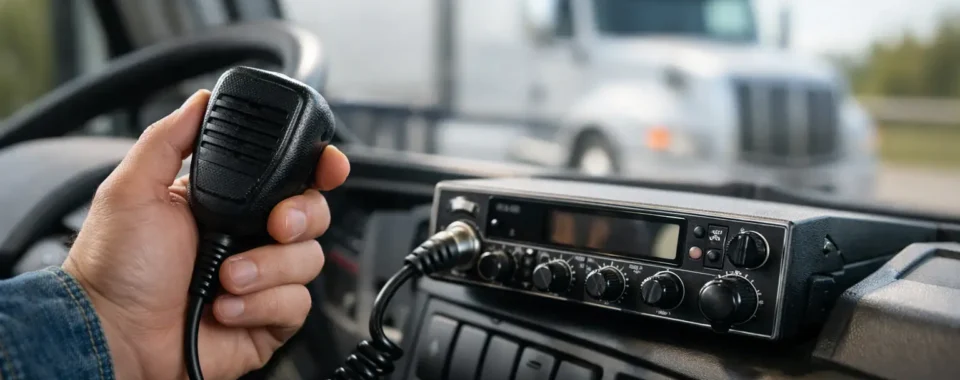

A traffic backup can stretch for miles before any app catches up, and that is exactly why CB radios for truck drivers still have a place in the cab. When drivers need immediate road chatter, a quick warning about a wreck ahead, or a way to reach nearby trucks without depending on cell coverage, CB remains one of the simplest tools available.
That does not mean every CB setup is worth buying. Some drivers want a basic radio that handles day-to-day highway use. Others need stronger audio, weather channels, better filtering, or a compact chassis that fits a modern dash. The right choice depends less on hype and more on how you actually run.
Why CB radios still matter on the road
CB has changed, but it has not disappeared. In many lanes of trucking, it is still the fastest local communication method you can use without logging into an app, pairing a device, or relying on a subscription. If traffic locks up near a construction zone, another driver a mile ahead may tell you what is happening long before official alerts update.
That local, real-time value is the main reason experienced drivers keep a CB installed even when they also use smartphones, dispatch tablets, and fleet systems. A CB is not there to replace every other communication tool. It works best as a direct, short-range channel for what is happening right now in your immediate area.
There is also a practical backup argument. Cellular coverage can be inconsistent in mountain corridors, remote stretches, and bad weather. A CB radio will not solve every communication problem, but it gives drivers one more layer of access when other systems are delayed, overloaded, or simply unavailable.
What truck drivers should look for in a CB radio
The first thing to understand is that advertised power numbers do not tell the whole story. For legal CB use in the US, radios operate within FCC limits. In day-to-day trucking, the difference between a poor setup and a useful one usually comes down to receiver quality, antenna performance, installation, and noise control rather than flashy claims on the box.
Clear audio matters more than gimmicks
If you spend long hours in the cab, harsh or muddy audio gets old fast. A good CB should give you strong speaker output and clean receive audio that can cut through engine noise and road noise. Public address features and extra effects may sound appealing, but they are secondary. Clear communication is what pays off on the interstate.
Automatic noise limiting and squelch control help too. Trucks create plenty of electrical noise, and some environments are more challenging than others. Good filtering can make the difference between a usable radio and one that stays turned down because it is annoying to listen to.
Size and mounting are real-world issues
Not every truck gives you room for a full-size radio. Many newer cabs have tighter dash layouts, overhead consoles, and more factory electronics competing for space. Compact CB units are often the better choice if installation space is limited, but a larger chassis may offer easier controls and a front-facing speaker that is easier to hear.
This is one of those areas where it depends on the truck and the driver. If you wear gloves often or need to adjust controls while moving, small buttons and deep menus can be frustrating. A simpler radio with physical knobs may be a better fit than a feature-heavy model.
NOAA weather channels are worth having
For many drivers, weather access is not optional. Radios with built-in NOAA weather channels add practical value, especially for long-haul routes crossing multiple weather regions. If freezing rain, high wind, or severe storms are on the route, quick access to weather information is useful without switching devices.
RF gain and scan can help, but they are not mandatory
RF gain lets you manage how much incoming signal the radio receives, which can help reduce distant chatter when you only care about nearby traffic. Scan functions can also be useful, especially if you monitor multiple channels. Still, these are supporting features. They are helpful, not essential, if the core radio and antenna system are weak.
The antenna is half the system
A lot of disappointment with CB radios for truck drivers comes from poor antenna choices or poor tuning. Drivers sometimes blame the radio when the real problem is the antenna system. In practice, the antenna has a huge effect on range, clarity, and overall performance.
A well-installed antenna with proper grounding and tuning will usually outperform a better radio paired with a bad install. That is why experienced radio shops spend time on SWR tuning, mount location, coax quality, and grounding. Skipping that step can lead to weak transmit performance, poor receive range, and possible radio stress over time.
Dual antennas are common on tractors for both practical and visual reasons, but they need to be installed correctly to work as intended. In some cases, a single well-placed antenna is the better choice. There is no universal answer that fits every truck body style and route profile.
Common mistakes when buying a CB for a truck
One mistake is buying based only on price. The cheapest unit may work, but if the controls are flimsy, the speaker is weak, or the receiver handles noise poorly, it may not hold up to daily commercial use. On the other side, the most expensive model is not automatically the best choice if you will never use half the features.
Another mistake is ignoring installation quality. Even a solid radio can underperform if the power is poorly wired, the antenna is mounted in a compromised location, or the SWR is never checked. Truck electrical environments are not gentle, and radio gear benefits from being installed correctly the first time.
A third mistake is expecting CB to act like a long-distance fleet network. That is not what it is built for. CB is best for local communication, road conditions, nearby driver coordination, and backup use. If your operation needs wide-area dispatch coverage, private group communications, or system-level control across multiple states, a different radio platform may make more sense.
CB versus newer communication options
This is where some nuance helps. CB is still useful, but it is not always the complete answer for modern fleet communication. If a company wants reliable group calling across large distances, GPS-based management, or communications that are not limited by local radio range, Push-to-Talk over Cellular or business radio systems may be a better fit.
That does not reduce the value of CB in trucking. It just puts it in the right lane. Many drivers and fleet operators use layered communication for a reason. CB handles local awareness. Cellular and fleet systems handle dispatch, routing, and company coordination. Each solves a different problem.
For independent drivers, the decision is often simpler. A CB remains one of the most accessible ways to communicate with nearby traffic and other drivers without recurring service fees. If your goal is highway awareness and direct local contact, that is still a strong use case.
How to choose the right CB radios for truck drivers
Start with your route type. Long-haul interstate driving, regional hauling, port work, and convoy coordination can all place different demands on a radio. If you spend most of your time in dense traffic corridors, receive clarity and noise rejection may matter more than extra features. If you run through severe weather regions, weather access should move up the list.
Then look at your cab layout and installation options. A radio that fits cleanly and can be operated comfortably is better than one that looks impressive on paper but is awkward in daily use. Think about microphone placement, speaker direction, and whether the controls are easy to manage while driving.
Finally, treat the antenna and tuning as part of the purchase, not an afterthought. A properly matched system will give you the performance you actually expect when you key the mic. That is one reason experienced suppliers such as Cogent Radios Group focus on practical fitment and support rather than just pushing boxes.
Are CB radios still worth it for truck drivers?
For plenty of drivers, yes. They are still a practical tool for road intelligence, short-range communication, weather awareness, and backup communication when other systems are less convenient or less available. They are not perfect, and they are not the answer to every fleet communication need, but they continue to solve a very specific problem well.
The smart approach is to buy for the way you drive, install the system correctly, and keep expectations realistic. When the setup is right, a CB is not just another piece of equipment in the cab. It is one of those tools you may not use every minute, but when you need it, you are glad it is there.