

A crew spread across three counties does not care whether the technology sounds impressive. They care whether the driver can reach dispatch, whether the supervisor can talk to every site at once, and whether a missed message turns into downtime. That is the real reason people ask, what is push to talk over cellular. They are usually trying to solve a coverage problem, a coordination problem, or both.
Push-to-talk over cellular, often shortened to PoC, is a radio-style communication system that uses cellular data networks and cloud-based platforms instead of relying only on traditional radio repeaters and local RF coverage. In plain terms, it gives users the familiar press-to-talk experience of a two-way radio, but the audio travels over LTE or 5G networks and, in some systems, Wi-Fi as well. The result is wide-area communication that can work across town, across a state, or nationwide, as long as the device has network access.
What is push to talk over cellular and how does it work?
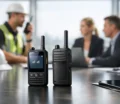
A PoC radio looks and feels a lot like a conventional business radio. You press the PTT button, speak, and your message is sent to another user or a talk group. The difference is what happens behind the scenes. Instead of transmitting directly over a licensed or unlicensed radio frequency to nearby radios or a repeater, the device sends digitized voice through a cellular network to a server platform, which then routes it to the intended users.
That architecture changes the coverage equation. A conventional UHF or VHF radio system is limited by terrain, buildings, antenna height, repeater placement, and available spectrum. A PoC system is mostly limited by cellular coverage, data availability, device provisioning, and the quality of the service platform. If your team already works in areas with solid carrier coverage, PoC can extend communications far beyond the footprint of a local radio system without requiring you to build radio infrastructure.
Most PoC systems support one-to-one private calling, group calling, emergency alerting, GPS location, recording, and web-based dispatch. Many devices also include Android-based features, Wi-Fi, Bluetooth, and applications that go beyond voice alone. That makes PoC attractive for teams that want radio simplicity with some of the management tools people usually associate with mobile apps and fleet systems.
Why businesses choose PoC instead of traditional radios
For many organizations, the biggest advantage is range. A landscaping company with crews in multiple cities, a logistics operation covering several counties, or a security firm staffing mobile units across a metro area may not want the cost and complexity of repeaters, tower access, engineering, and maintenance just to keep everyone connected. PoC can reduce that barrier because the carrier network is already there.
There is also a practical staffing advantage. Dispatchers can manage users from a browser-based console, create or modify talk groups, and monitor activity without handling as much fixed radio infrastructure. If an operation grows, adding users can be simpler than redesigning a conventional system.
That said, the answer is not always PoC. A warehouse with steel racks, a manufacturing facility with RF-challenging interiors, or a campus that needs instant local coverage during carrier congestion may still be better served by DMR or another dedicated radio system. This is where system design matters. The right question is not whether PoC is newer. It is whether it fits the operating environment.
What makes PoC different from a cell phone app?
This is where a lot of confusion starts. Yes, a smartphone can run a push-to-talk app. But a purpose-built PoC radio is different from asking employees to use their personal phones.
A dedicated PoC device is built for field use. It usually has a loud front-facing speaker, a physical push-to-talk button, better glove-friendly operation, longer shift-ready battery life, and accessories such as remote speaker microphones, surveillance earpieces, and multi-unit chargers. It behaves like a work radio, not like a consumer phone that happens to have a PTT app installed.
It also helps separate work communications from personal devices. For many businesses, that matters just as much as coverage. A field team needs a dependable communication tool that stays charged, stays assigned, and stays easy to use under pressure.
Where push to talk over cellular works best
PoC is especially useful when teams are mobile and spread out. Transportation, delivery, shuttle services, property management, school transportation, hospitality, event operations, utility support, and agricultural coordination are common fits. If your workforce moves in and out of a broad service area, PoC can keep everyone on the same system without the normal distance limits of conventional radio.
It also works well for temporary or changing operations. Event organizers, seasonal crews, and project-based teams often need communications that can be deployed quickly without building infrastructure at each location. With the right devices and service plan, a PoC system can be activated, grouped, and managed with far less setup time.
Families, travel groups, and community teams sometimes look at PoC for similar reasons. If they want radio-style communication over a large geographic area and do not want to depend on a local repeater network, PoC can be a practical option. The real question is whether they need a dedicated communications tool or whether simpler consumer methods are enough.
The trade-offs you should understand before choosing PoC
PoC is not magic coverage. It depends on cellular service. If your crews work in dead zones, remote mountain areas, deep basements, or disaster conditions where cellular networks are down or overloaded, PoC may not give you the reliability of a properly designed land mobile radio system. For mission-critical environments, that distinction matters.
Latency can also differ from conventional radio. Well-designed PoC systems are usually fast enough for normal business operations, but they may not feel exactly the same as a local direct radio channel. Some users notice a slight delay, especially on congested or weak data connections.
Ongoing cost is another factor. A traditional radio system often requires higher upfront investment in equipment and infrastructure, but lower recurring network costs once it is in place. PoC often lowers the infrastructure burden but introduces monthly service expenses tied to devices and network access. Depending on fleet size and time horizon, either model can make more sense.
There is also a resilience question. A conventional radio system can continue to operate independently of commercial cellular networks if it is properly designed and maintained. PoC gives broad reach and flexibility, but it does not remove your dependence on outside carrier availability unless you are building a hybrid communications plan.
PoC vs DMR: which one should you choose?
This is usually not an either-or discussion forever. Many organizations use both.
DMR is a strong fit when you need dedicated local coverage, control over your infrastructure, low ongoing network dependency, and predictable performance inside a defined service area. PoC is a strong fit when your teams are geographically dispersed, you want rapid deployment, and carrier coverage is better than what a local radio footprint can realistically provide.
A hybrid approach is often the smart answer. Some businesses run DMR on-site and PoC for supervisors, drivers, or regional staff who travel beyond the local system. Others choose devices or workflows that bridge the two. That way, you are not forcing one technology to do a job it was never meant to handle.
At Cogent Radios Group, this is usually where the best conversations happen. Not around buzzwords, but around maps, buildings, fleet routes, and actual user behavior.
How to know if PoC is right for your operation
Start with the way your people work. Are they mostly in one facility, or across a wide territory? Do they need communications during normal business operations, or in high-risk scenarios where independent radio infrastructure is a priority? Are they tech-comfortable, or do they need a simple device with a push-to-talk button and very little training?
Then look at coverage, not assumptions. Carrier service can be excellent in one part of a route and weak in another. Building construction matters. Rural valleys matter. Parking garages matter. A communications plan should account for where messages actually need to get through, not just where the coverage map looks good.
Finally, think about support. PoC is more than a device purchase. It involves provisioning, user management, accessories, charging plans, group structure, and sometimes integration with dispatch workflows. The hardware matters, but so does having someone help match the system to the job.
If you are evaluating PoC, the goal is not to chase the newest option. It is to give your team a communication tool that works the way they work, in the places they actually go, on the days when missed communication costs real money. That is usually the right place to start.