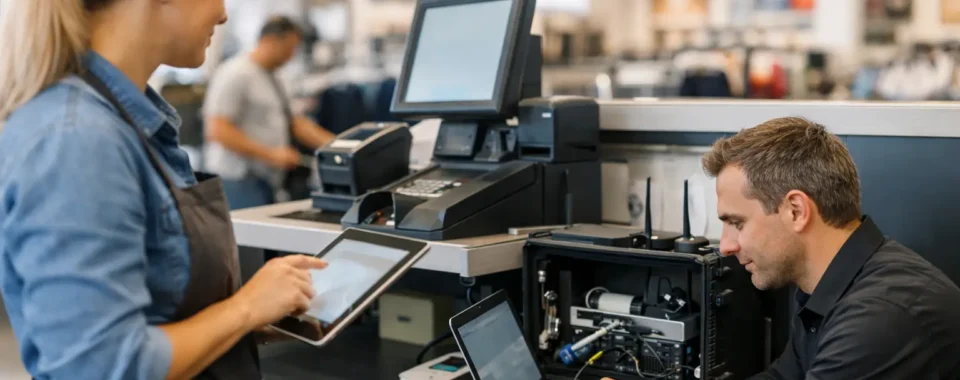

A missed curbside handoff, an unattended fitting room call button, or a delayed response to a spill can quickly turn into a poor customer experience. Retail PoC deployment gives store teams a practical way to communicate across departments, locations, and regions without relying on limited-range radios or personal cell phone calls.
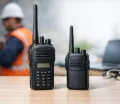
Push-to-Talk over Cellular radios use nationwide cellular networks and Wi-Fi to provide radio-style communication wherever authorized coverage is available. For retail organizations, that can mean a department manager can reach receiving, loss prevention, facilities, or another store with one button press. The technology is straightforward. The deployment is where the real work happens.
A successful rollout starts with how people actually work on the sales floor, in the stockroom, at loading docks, and between stores. It should reduce friction, not introduce another device employees leave in a drawer.
Start Retail PoC Deployment With Real Workflows
The best system design comes from observing communication bottlenecks before selecting equipment. A single-store specialty retailer may primarily need fast coordination between the register, stockroom, and floor associates. A multi-location retailer may need store-to-store groups, regional management channels, and an emergency call path that reaches designated leaders immediately.
Map the moments when a delayed answer has operational consequences. Common examples include requesting price checks, calling for carryout assistance, coordinating delivery arrivals, responding to customer incidents, opening or closing the building, and managing peak traffic around fitting rooms or service counters.
This exercise also clarifies who needs to hear what. Putting every employee into one large talk group usually creates noise and causes staff to ignore radio traffic. A better approach is to create focused groups such as store operations, management, receiving, security, and facilities. Supervisors can belong to multiple groups, while associates use the channel relevant to their shift.
There is a trade-off. More groups provide cleaner communication but require clearer procedures and a little more training. Too few groups are simpler to explain but can become chaotic during busy periods. The right balance depends on store size, staff count, and how frequently departments need to coordinate.
Verify Coverage Before Committing to Devices
PoC radios depend on cellular and Wi-Fi connectivity, so coverage validation is not a box to check after equipment arrives. Test the specific stores and the areas that matter: sales floors, basements, interior stockrooms, coolers, loading docks, parking areas, garden centers, and employee entrances.
A store can have excellent cell service near the front windows and weak service behind concrete walls in receiving. Wi-Fi may solve some indoor gaps, but it needs to be stable, properly configured, and available to the radios where employees work. In some facilities, a carrier choice, external antenna solution, signal booster, or a different operating plan may be appropriate.
Testing should include actual voice traffic, not just a signal indicator on a phone. Have users make individual calls, group calls, emergency calls, and calls while walking through known problem areas. Listen for delayed audio, dropped connections, missed calls, and difficulty changing groups. A short pilot with real staff often reveals issues that a desktop coverage map cannot.
For a retailer with multiple sites, do not assume one carrier performs the same everywhere. A deployment may require different carrier options or coverage planning by region. That is not a failure of PoC. It is a practical part of designing a nationwide communication solution around real operating conditions.
Choose Radios for the Retail Environment
Retail teams need equipment that is easy to carry, easy to hear, and durable enough for constant use. The right radio is rarely the one with the longest feature list. It is the one employees can use confidently during a busy shift.
For floor associates, a compact PoC radio with a clear display, strong audio, and a comfortable belt clip may be the best fit. Receiving and facilities personnel may need a more rugged unit, higher audio output, a larger battery, or accessories suitable for gloves and noisy back-of-house work. Managers may prefer a radio with a screen that clearly identifies the active group and caller.
Accessories deserve the same level of attention as the radio itself. A poor earpiece can make staff stop using the system. A remote speaker microphone can be more practical for managers who move between the sales floor and stockroom. Multi-unit charging solutions simplify shift changes and keep spare radios ready for seasonal staffing.
Avoid treating device selection as a purely purchasing decision. Test candidate radios with the people who will use them. Ask whether the push-to-talk button is easy to find, whether audio is understandable near refrigeration equipment or customer traffic, and whether the unit stays secure during lifting and stocking. Small usability details determine adoption.
Plan Channels, Permissions, and Escalation Paths
A PoC platform can do more than replicate a conventional radio channel. It can support private calls, group calls, priority functions, location features, dispatch access, and administrative controls. Those capabilities are useful only when they match a defined operating need.
Set a simple communication plan before launch. Specify the primary group for each role, the appropriate use of private calls, who can initiate an emergency alert, and which managers receive it. Define whether store teams can contact other locations directly or whether cross-store communication should route through district management.
Emergency procedures need special care. An emergency button is not a substitute for 911 or a store safety plan. Staff must understand what happens when it is pressed, who is expected to respond, and when emergency services must be contacted. The process should be tested with managers and documented in plain language.
Permissions also protect everyday operations. Not every employee needs access to every group. Restricting sensitive channels, such as loss prevention or executive communications, reduces accidental traffic and keeps the system useful for the teams assigned to it.
Roll Out in Phases, Not All at Once
A phased retail PoC deployment lowers risk and gives leadership time to refine procedures. Start with one representative store or a small group of locations. Include a mix of roles in the pilot: floor associates, store managers, receiving staff, and anyone responsible for safety or facilities.
During the pilot, measure practical results. Are response times improving? Are employees using fewer personal calls or walks across the building? Is audio clear in high-noise areas? Are particular groups too busy? Feedback should be collected after normal shifts, not only during a demonstration.
Once the pilot is working, standardize the setup before adding more locations. That includes talk group names, radio labels, charging locations, spare-device procedures, accessory standards, and an onboarding checklist. Consistency makes it easier for regional leaders to support stores and for employees to transfer between locations.
Training should be brief and role-specific. Employees do not need a technical lecture on cellular networks. They need to know how to turn the radio on, select the correct group, place a clear call, adjust volume, charge the unit, and follow emergency procedures. Supervisors should also learn basic troubleshooting so simple issues do not become unnecessary downtime.
Support Keeps the System Useful After Launch
Communication needs change with store layouts, seasonal staffing, new locations, and evolving safety procedures. Plan for radio replacements, accessory inventory, account administration, and a clear point of contact when a device is lost or a group needs to be changed.
It is also wise to review the system after the first 30 to 60 days. Stores may discover that a group should be split, a manager needs a different accessory, or a receiving area requires a coverage adjustment. These refinements are normal. They are far less costly than allowing an ill-fitting process to become standard.
Retail communication works best when it feels immediate and dependable to the people serving customers. Cogent Radios Group can help organizations evaluate coverage, equipment, talk group design, and deployment support so the system fits the work instead of forcing the work to fit the system.
The goal is not to put another piece of technology in every employee’s hand. It is to make the next request, safety concern, delivery question, or customer need reach the right person without delay.