


The Benefits of DMR Radios for your Business!
In a fast-paced business environment, your team is only as effective as their ability to communicate. If you are still relying on old analog radios, you are likely dealing with static, dead zones, and battery failure halfway through a shift. DMR (Digital Mobile Radio) isn’t just a slight upgrade; it’s a complete overhaul of how your team coordinates, stays safe, and drives efficiency.
Crystal Clear Clarity, Every Time
Analog radios pick up every bit of background noise, from heavy engines and wind to warehouse machinery. DMR technology uses digital vocoders to filter out environmental noise and focus strictly on the human voice. This ensures your team hears instructions correctly the first time, even in the middle of a noisy factory floor or a windy construction site.
Double Your Capacity Without Extra Costs
DMR uses TDMA (Time Division Multiple Access) technology, which allows you to split a single frequency into two distinct “slots.” This means you get two simultaneous, independent talk paths on one single license. One group can coordinate logistics while another handles security on the same channel without any interference.
Power That Lasts the Whole Shift
Digital radios are significantly more power-efficient than their analog predecessors. Because the radio is only transmitting half the time by switching between those two time slots, it consumes far less battery power. This results in up to 40% longer battery life, ensuring your team can work a full 12-hour shift without a “low battery” chirp becoming a distraction.
More Than Just Voice: Data and Safety
DMR transforms a simple walkie-talkie into a sophisticated business tool. Integrated GPS Tracking allows you to see where your team is in real-time to optimize dispatching, while Text Messaging provides a way to send quiet updates when voice communication isn’t appropriate. Most importantly, built-in safety features like Man Down or Lone Worker alerts automatically notify dispatch if a team member is injured or unresponsive.
Secure and Future-Proof
You can stop worrying about competitors or outsiders listening in with a cheap scanner. DMR offers robust digital encryption, ensuring your private business operations stay private. Furthermore, most DMR radios are dual-mode, meaning they can talk to your old analog radios today while you transition your fleet to digital at your own pace.
The Bottom Line
Upgrading to DMR means fewer mistakes, better safety for your workers, and a communication system that grows with your business.
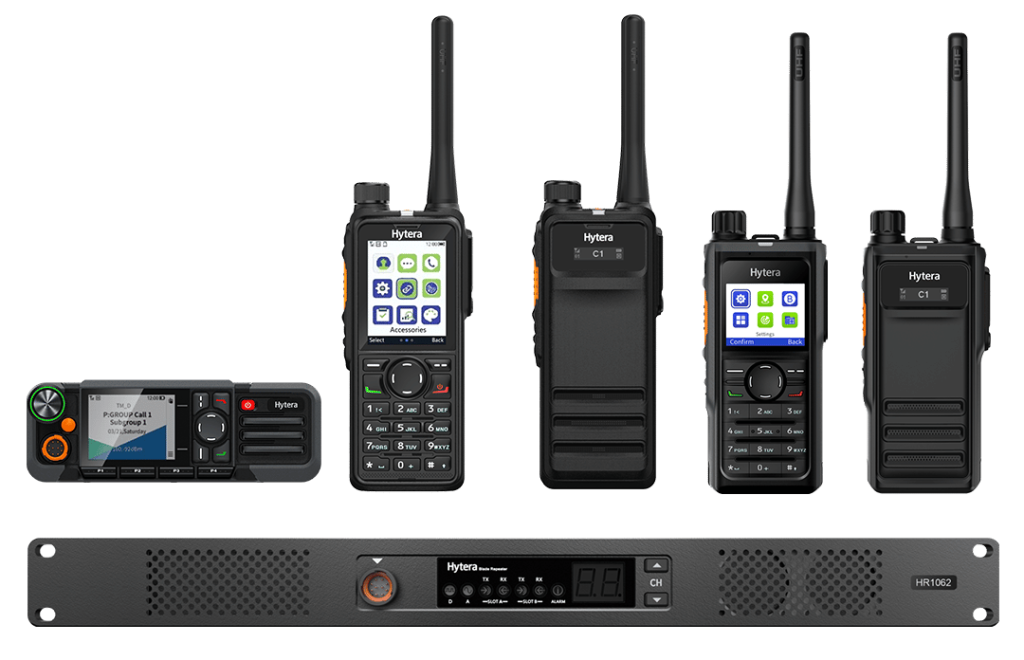
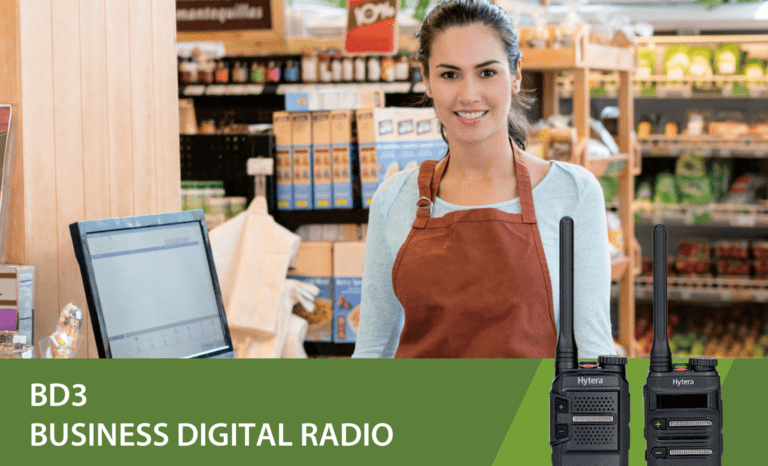

Lets break down the cost:
A cost-benefit analysis of moving to DMR focuses on shifting from reactive spending (repairing old tech) to strategic investment (improving operational throughput). While the initial hardware cost for digital is higher, the “Total Cost of Ownership” (TCO) often favors DMR over a 3- to 5-year period.
Financial Comparison: Analog vs. DMR
| Cost Category | Analog (Legacy) | DMR (Digital Upgrade) | Business Impact |
| Initial Hardware | Low ($150–$300/unit) | Moderate ($300–$600/unit) | DMR requires higher upfront CapEx. |
| Licensing Fees | Standard per frequency | Potential 50% Reduction | DMR doubles capacity on one frequency, potentially cutting recurring FCC/regulatory fees. |
| Infrastructure | 1 Repeater per channel | 1 Repeater for 2 channels | DMR halves the hardware needed for multi-group communication. |
| Battery Cycles | 8–10 hours per charge | 12–16 hours per charge | DMR reduces the need for “spare” batteries and mid-shift charging stations. |
| Maintenance | Increasing (Parts scarcity) | Low (Warranty & Software) | Legacy analog parts are becoming “end-of-life,” driving up repair costs. |
The “Invisible” ROI (Return on Investment)
1. Capacity Without Construction
To add a second channel in an analog system, you must buy a second repeater, a second antenna, and often a “combiner” to keep them from interfering. With DMR, that second channel is free and built into your existing frequency via TDMA technology. You gain 100% more capacity with 0% more antenna space or tower rent.
2. Labor Efficiency & Downtime
Analog static causes “repeat-back” requests. If a worker misses an instruction due to noise and takes 5 minutes to rectify a mistake, and that happens twice a day across 20 workers, you are losing over 3 hours of productivity daily. DMR’s noise-canceling digital audio virtually eliminates this “communication tax.”
3. Safety Liability Mitigation
The cost of a single workplace accident can be catastrophic. DMR’s automated safety features—such as Man Down and GPS Indoor/Outdoor Tracking—provide a layer of risk management that analog simply cannot offer. Reducing emergency response time by even 60 seconds can have a significant impact on insurance premiums and legal liability.
4. Phased Migration Path
You do not have to replace every radio at once. Most DMR portables are “Dual-Mode.” You can replace your oldest, broken analog units with DMR units today. They will talk to your remaining analog fleet now and switch to full digital mode once the entire fleet has been refreshed, spreading the investment over multiple budget cycles.